If you think corn only has a place in the feedlot, in your car’s fuel tank or on your plate, think again.
Corn is one of many crops gaining interest from the biomanufacturing sector, which could grow domestic demand for the product through new uses, such as the air filters in your home.
Aerterra, an air filter manufacturer based in Blair, Neb., is part of that biomanufacturing sector, turning American-grown corn into polymers for its revolutionary air filters.
Co-founders Curtis Firestone and Mike Malloy brought their backgrounds in sustainability and air filtration together to develop the Aerterra air filter for home use. Malloy said they were looking at a variety of materials they could use to develop a more renewable air filtration product and found that corn fit the bill.
“We wanted to make an air filter that used renewable materials,” Malloy said.
Indoor air quality is a big health hazard and getting worse, he added. When they looked at the market, they saw that filters were using extracted materials that were going into landfills, compounding a public health and environmental situation.
“The typical furnace filter is probably made out of polyester. It might be made out of micro fiberglass, or it might be made out of an acrylic or polypropylene,” Malloy explained.
The Aerterra filters, however, use corn plastic for the filtration material.
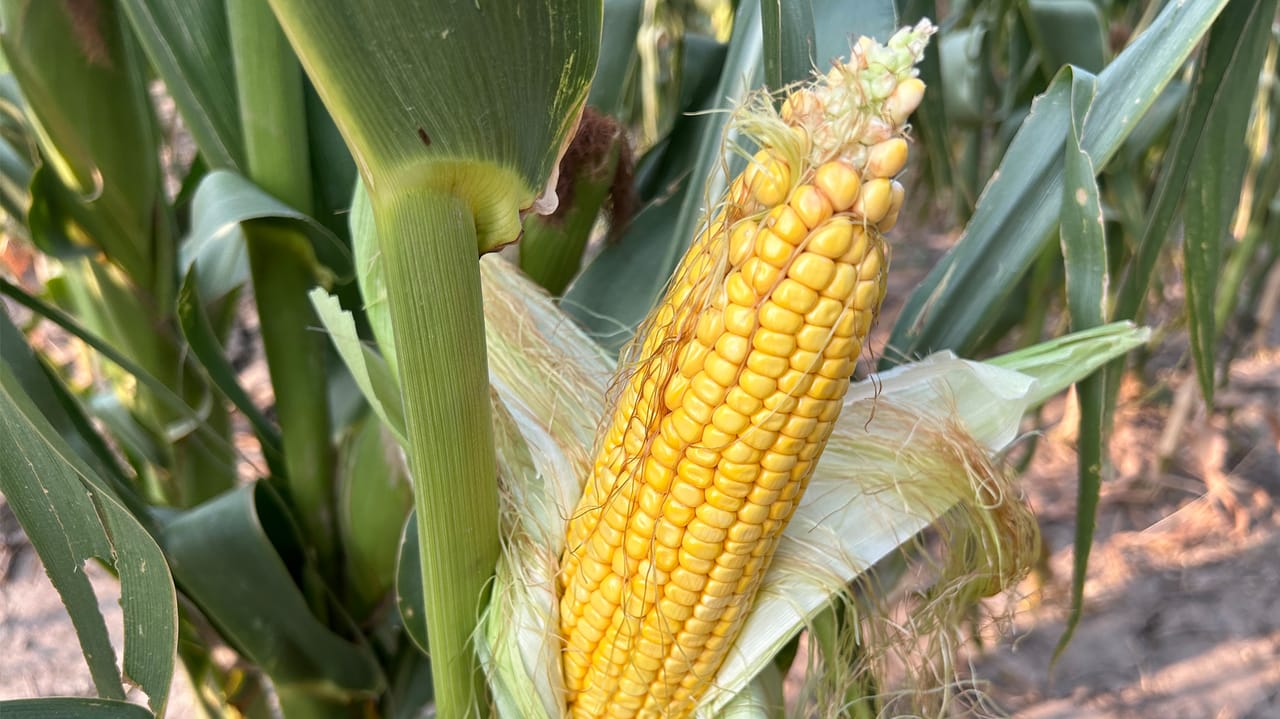
Malloy explained that through distillation, corn starch is turned into polylactic acid, a bioplastic he said is basically similar in chemistry to polystyrene. Corn plastic can be used in a wide variety of products in place of petroleum-based plastics, from coffee mugs to women’s clothing and, in this case, home air filters.
By using corn plastic in the filtration material, the shedding of fine particles that can be inhaled is less likely, Malloy said. And they work the same or better as conventional filters, he added.
Concept work expands
Air filters made from corn plastic is a revolutionary idea, but just how big of an effect could it have on U.S. corn demand and the environment?
Malloy said there’s about 0.04 to 0.07 bushels of corn in each filter, depending on the size of the filter, and although that may not seem like it could move the needle on either corn use or sustainability, Malloy said you need to consider the scale.
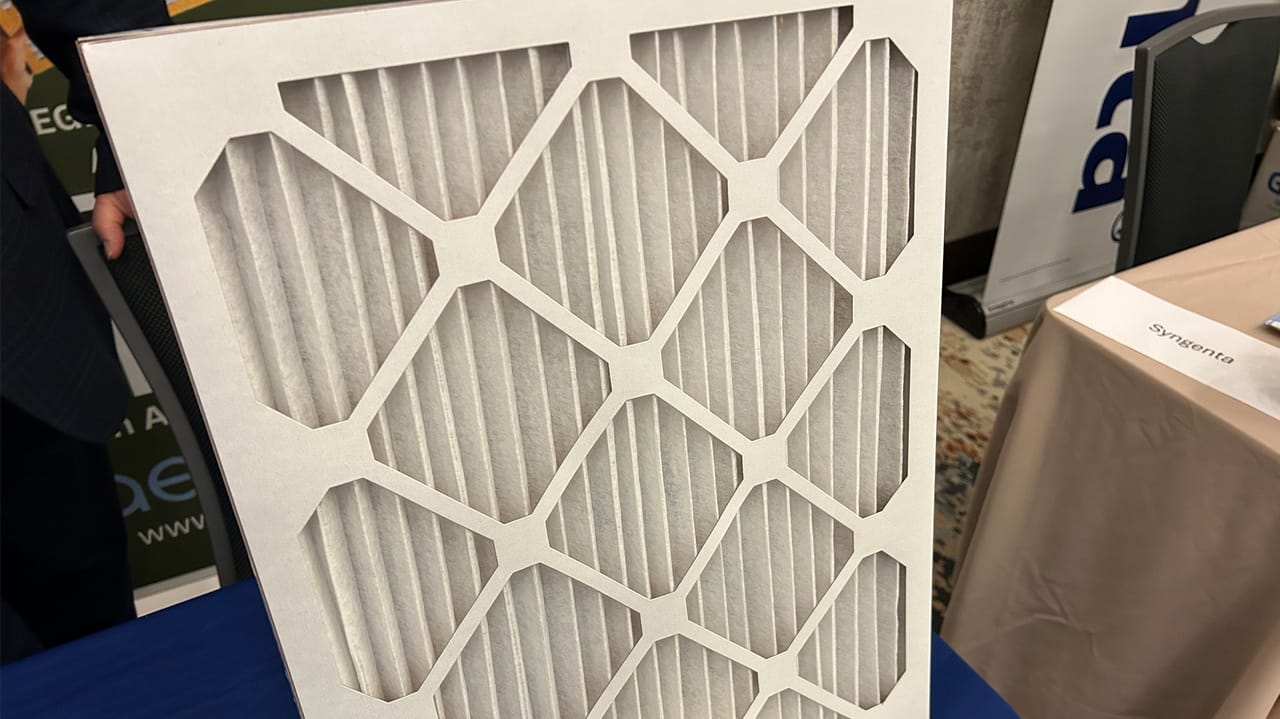
Millions of conventional air filters end up in landfills every year. Malloy said the Aerterra filter takes less energy to produce, is more compostable and degrades easier at the end of its life.
According to the company’s website, its domestic manufacturing and supply chain means more jobs and more value is brought back to local economies.
It’s the type of product that the National Corn Growers Association Research and New Uses Action Team was designed to seek out and support.
Chad Epler, Columbus, Kan., a Kansas Corn commissioner for the Southeast District, is also chairman of the action team. The team aims to accelerate commercialization of new uses for corn.
Think of it as a nursery for groundbreaking ideas. These new uses may not be giant markets for American corn, but cumulatively, they could be.
“Our team is on the front end of finding these small or startup companies and getting their idea out there,” Epler said.
These ideas can help broaden demand for U.S. corn domestically and create a stable domestic market beyond food, feed and fuel uses.
“We want to make sure, as an action team, that we explore all the avenues possible,” Epler said.
“I use baseball terms, and I tell farmers that you don’t have to hit a home run; you can score hitting singles and doubles, over and over, too,” he added.
So, if one project uses 50 million bushels in one avenue, another uses 45 million, and a third uses 70 million, it all adds up, he said.
The action team manages the NCGA Consider Corn Challenge. Aerterra was one of three winners in 2025 to receive $100,000 to help it further the commercialization process.
There have been 19 total winners of the Consider Corn Challenge, according to NCGA, and the products that are commercially available have the potential to use 3.4 billion bushels of U.S.-grown corn each year.
Epler said the point is to connect people with ideas to places where they can access funding and move their products. He added that there is something gratifying about seeing a business that uses corn grown here to make a difference in people’s lives.
“I’m looking across the road at corn that is 4 to 6 inches tall, and when we will harvest that corn, some of it could be used in an air filter that I will use in my house,” Epler said.
From an environmental perspective, a health perspective and a corn market perspective, the Aerterra filter — and other products like it — just makes sense, he said.
Biomanufacturing boom to come
“Biomanufacturing” is more than just a buzzword; it’s potentially a new era of sustainability connecting fields to consumers beyond food, feed and fuel.
And it has been getting a lot of attention on Capitol Hill.
At the beginning of April, Reps. Michelle Fischbach, R-Minn., and Nikki Budzinski, D-Ill., introduced H.R. 8137, the Biobased Materials Investment and Production Act. The act would incentivize production of bio-based chemicals and materials, much like the corn plastic used in the Aerterra filters.
According to Fischbach’s website, the bill’s investment support would provide businesses with a 30% investment tax credit to help offset capital costs of constructing or retrofitting manufacturing facilities. Its production support model would offer a tax credit of 10 cents per pound of renewable materials produced and sold, up to $10 million a year.
In a news release following the bill’s introduction, NCGA President Jed Bower said: "Corn growers are very appreciative of Reps. Fischbach and Budzinski for introducing this legislation that will diversify demand for our farmers, strengthen rural economies and support domestic manufacturing. Boosting market opportunities for bioproducts made from agricultural feedstocks creates new revenue streams for growers of many different crops, which is particularly helpful during difficult economic times."
For perspective, NCGA’s first-quarter economic outlook in January reported that in 2025, U.S. farmers produced a record 16.8 billion bushels of corn. And while the 2026 projection of planted acres is 3.7 million fewer acres than in 2025, if yields repeat, the U.S. crop could top 16 billion bushels again.
If that corn supply doesn’t find a home from new demand, that could further put downward pressure on corn prices. The January outlook forecast a $4.10-per-bushel market-year average corn price for 2026, which would be 37% lower than the $6.54 the 2022 crop brought.
When you put that against expected yields and increased input costs, it could be that each bushel of corn harvested in 2026 would lose 88 cents, according to the outlook, without added demand from new markets.
Biomanufacturing — using corn in aviation fuel, plastics and fibers — could be the next phase of market potential for corn-based ethanol. And that could be the next boom in U.S. corn demand.