Kansas dairy farmers got a bit of bright news April 25. After more than a decade of lobbying and educational efforts, the Kansas State University dairy research unit finally has funding earmarked in the state’s budget. It’s one step closer to a complete $45 million overhaul of the university’s teaching and research facility on the Manhattan, Kan., campus.
Kansas Gov. Laura Kelly signed the state budget into law, calling for a three-year funding mechanism that will be equally shared by invested parties, according to a news release.
The state legislature will provide three annual $5 million installments, K-State will contribute $15 million from its resources, and the dairy industry will be responsible for the remaining $15 million cost. To date, the Kansas Dairy Commission has pledged $500,000 to the project, and the K-State Livestock Meat Industry Council has committed $250,000.
The need for a complete overhaul of the university’s dairy research unit has been a hot topic for Kansas dairy farmers since about 2012, said Micheal Brouk, K-State Extension dairy specialist.
The current dairy was built in 1977, using late-’70s technology and dairy designs, and has reached the end of its usefulness in a teaching and research setting. The project will demolish the current dairy and build in its place a facility that will have more flexibility for teaching and research for the dairies of today and the future.
“Kansas has seen growth in the numbers of dairy cattle, an increase in dairy processing, and greater collaborative opportunities in animal health and nutrition research,” said David Lane, president of the Kansas Dairy Association and a dairy farmer from Goddard, Kan. “Not only do dairy farmers benefit from this investment, [but] so do those looking toward the future of dairy foods nutrition, water stewardship and energy development.”
Dairy demand remains high
The state’s dairy industry has seen rapid growth in the past 20 years, from large dairy herds relocating for the agriculture-friendly environment to processing opportunities like the one-year-old Hilmar Cheese plant in Dodge City, and more.
“Agriculture is the primary component of the Kansas economy, and the Kansas dairy industry is probably the fastest-growing component of agriculture in Kansas,” said Dan Moser, K-State’s Eldon Gideon Dean of the College of Agriculture.
As of the April 22 USDA Milk Production report, the state’s dairy herd numbered almost 250,000 head, mostly from large-scale operations relocating to the state.
But Kansas isn’t alone in this dairy boom. Across the Great Plains, from Texas to South Dakota, there are approximately 1.5 million head of dairy cattle. Dairy herd numbers are climbing, mainly to the ability to expand their dairy footprints in wide-open rural spaces with limited urban sprawl getting in the way.
That growth requires a workforce that is trained on the latest equipment, Moser said. The new dairy unit will be a tremendous recruitment tool for students and researchers who want to make a difference in the Kansas dairy industry, and the Great Plains dairy industry as a whole, he added.
“On the research side, we need to do the projects, the trials and experiments in industry-relevant facilities,” Moser added.
The work done at the K-State dairy unit must reflect the realities of today’s stakeholders, whether that’s nutrition, reproduction, health, genetics, or animal welfare and comfort situations, he said.
Eye toward the future
Updating the K-State dairy research unit is one way to show Kansas farm youth there are opportunities in agriculture careers in this state, both Moser and Brouk said.
“It’s a great opportunity for young people that are excited about food production and want to remain in Kansas,” Moser said, “to show that they can have a great opportunity right here.”
Brouk and Moser both commended the efforts of the Kansas dairy industry and those who kept this project front and center in the state legislature for many years. It took long-term foresight and commitment to get it to this point.
This process started in about 2012, Brouk said, with the first commitment of funds from the Kansas Dairy Commission. Brouk remarked that the process took so long that some Kansas dairy leaders on the board today are the children of previous commissioners.
In talking with Kansas legislators, Moser said they quickly understood that dairies have a role to play in maintaining rural community vitality, creating jobs and drawing supporting industries into the state. Each cow on a Kansas dairy farm today returns about $8,000 to the local economy, supporting industries like trucking, as well as breeding, veterinary, pharmaceutical, nutrition and other services.
And considering the increasing value of processing in the state, milk production and the rapid increase in herd numbers, that number could be higher. So, the challenge wasn’t so much in getting buy-in at the state level, it was more in finding a funding mechanism that met statutory requirements.
Brouk said getting the funding included in the state budget is just the start. Now, a committee will meet with designers and choose a firm, with a facility design proposal due in February.
The goal is to start demolition and turning dirt next spring. In the meantime, K-State and Kansas dairy farmers will continue to develop industry partnerships to build a strong coalition to fully fund the project.
New facility focuses on innovation
Designing the new K-State dairy research unit from the ground up is a rare opportunity for the university and Kansas dairy farmers. Instead of making do with patches and temporary workarounds, they can build a facility that addresses a wish list that’s been in the making for decades.
While the design committee will look at more recently upgraded university facilities around the country, Brouk said the mission for the K-State facility is to better represent the conditions of the Great Plains dairy farmer.
“We operate in one of the more varied environments in the dairy industry, [with] variation in temperature and precipitation that we have across the state,” he said.
There are windy, dry conditions to the west, more humid conditions to the east, and rapid temperature changes that can stress animals. Kansas also is home to dairies of all sizes, Brouk said, and the goal is to have a dairy farm that will meet the region’s workforce training needs for dairies, as well as research needs for the dairy herds of tomorrow.
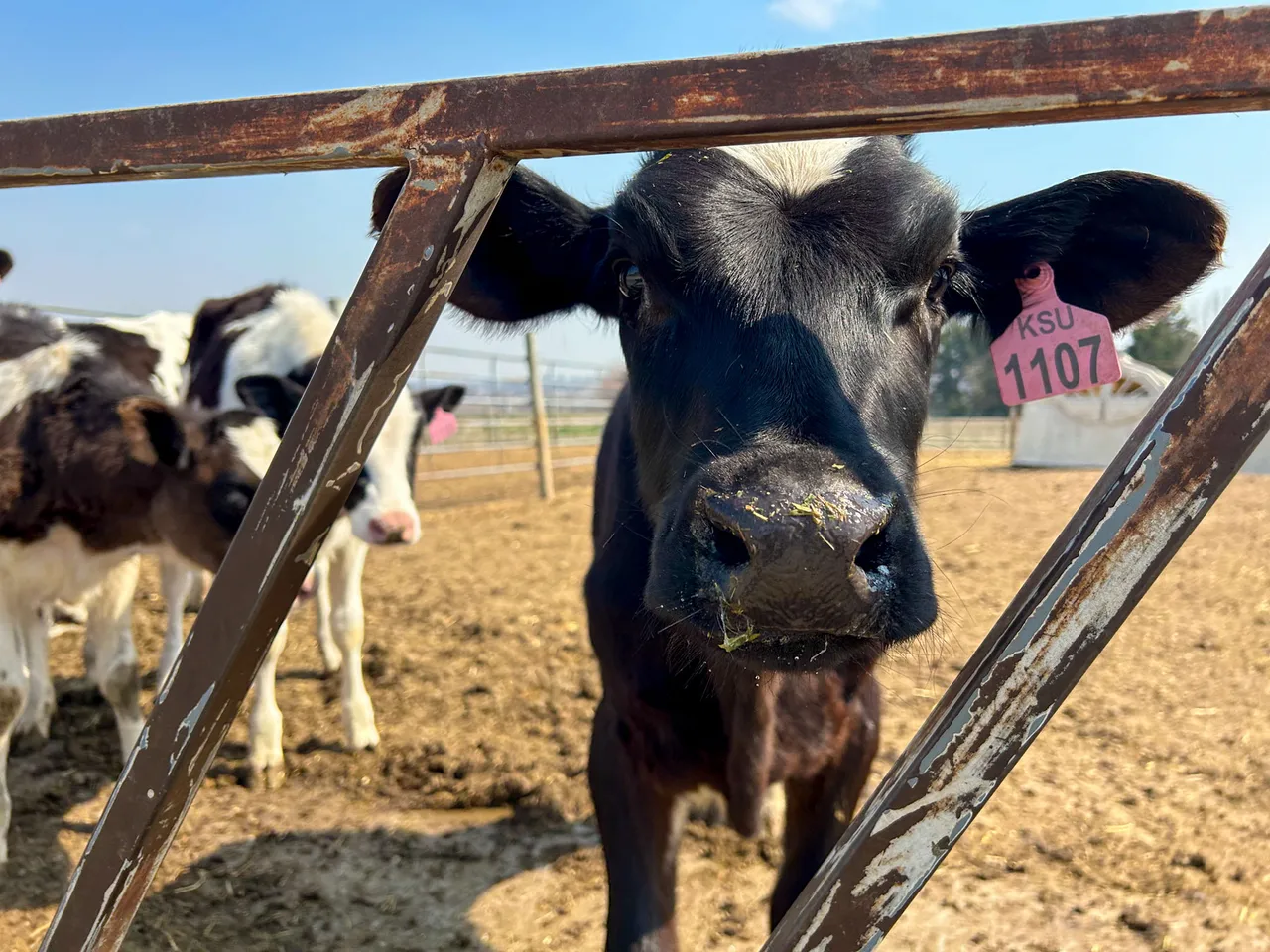
K-State’s goal, as a teaching and research facility, is to train the next generation of dairy employees who will manage herds in those conditions, and conduct research into cow comfort, nutrition, reproductive management and more.
From the configuration of the milking parlors, stalls and group pens to upgrading and accommodating the research equipment, this new facility aims to grow the university’s teaching, research and Extension capabilities, Brouk said.
“This facility will replace everything we have for mature cows,” Brouk said.
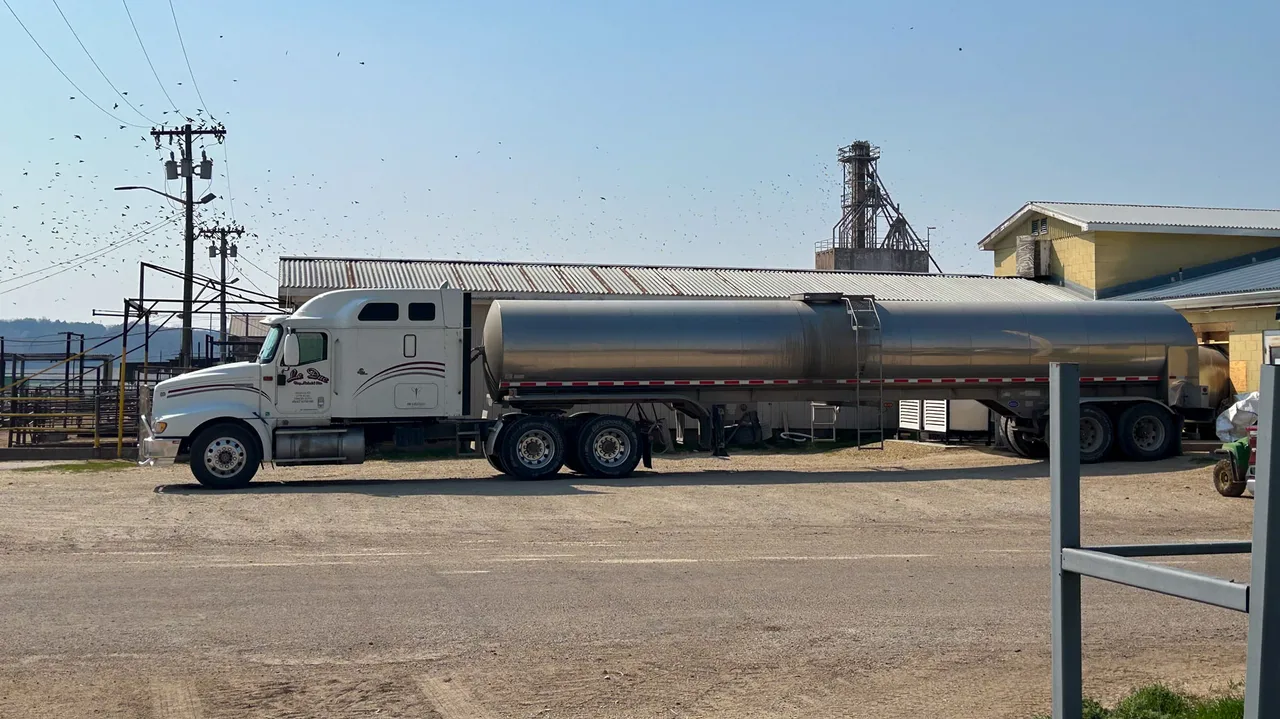
The wish list for the new K-State farm will include both robotic milkers, like those used on smaller farms, and a small rotary deck, like those used on larger dairies. The design will reconfigure milk truck traffic patterns and upgrade the bulk holding tanks designs.
It also will have space for lactating and dry cows, as well as its research herd. There will be individual stalls and group pens for research into cow comfort and nutrition, along with upgraded treatment pens for more convenient handling of health issues in the herd.
The plan is to have a facility that will have flexibility to adapt to new technologies that haven’t yet been introduced so it can grow with the Great Plains dairy industry’s needs.
“We will design for flexibility, and understand that this is not a static industry,” Moser said. “I think it’s going to be top of mind to build in flexibility so that as innovations come to the industry, they ought to be able to be implemented at a smaller scale on our facility.”
“It’s going to be a premier gem in the Great Plains region,” Brouk said. “That’s our hope.”