USDA’s June 30 Acreage and quarterly Grain Stocks reports usually feature corn and soybeans as the lead performers. This year, however, wheat stole the show.
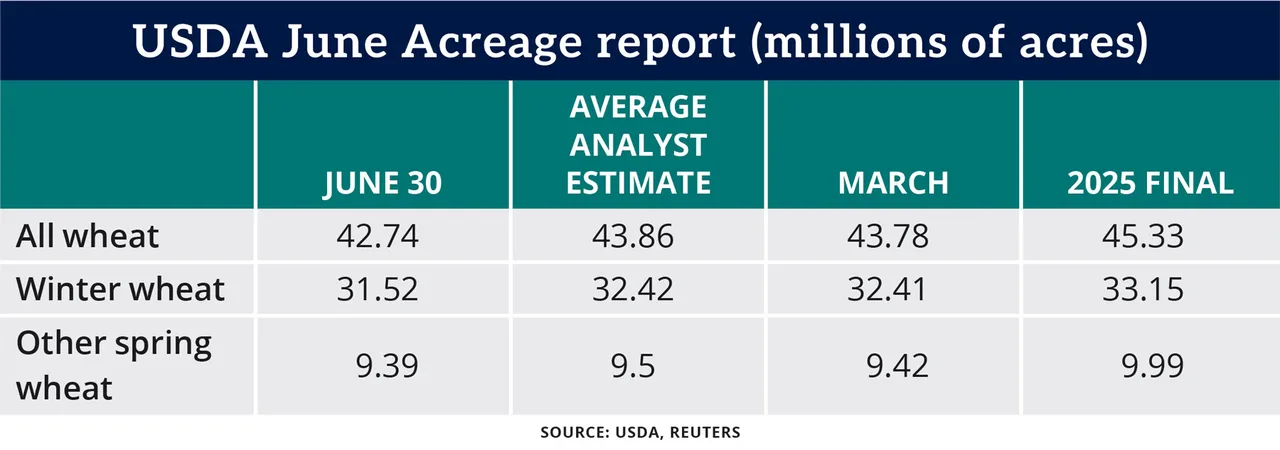
On June 30, USDA stunned the grain trade by slashing its estimate for 2026 plantings of all varieties of U.S. wheat by 1.035 million acres to 42.74 million acres, down 5.7% from 2025 and a record low. Analysts on average expected a small increase of about 83,000 acres.
The decline stemmed largely from shrinking hard red winter wheat ground in the Southern Plains, which has been gripped by months of drought. Winter wheat plantings shrank 890,000 acres to a six-year low of 31.52 million acres. Plantings of durum and other spring wheat varieties also fell.
The numbers also underscored U.S. grain farmers’ multiyear shift away from a crop that’s been routinely battered by bad weather, stiff export competition, shrinking domestic consumption and unprofitable prices. As recently as the late 1990s, U.S. wheat plantings topped 70 million acres, surpassing soybean acres in some years. It’s been mostly downhill ever since.
Kansas footprint shrinks
Even Kansas, the top U.S. wheat producer, has been downsizing. Kansas’ wheat plantings fell 5.5% in 2026 to 6.9 million acres, the third lowest for the state based on records going back to 1909, while soybean plantings rose 17% to 4.8 million acres.
It may come as a surprise, then, that both HRW futures and those based on soft red winter wheat have outperformed (up 23% and 18%, respectively, through July 1) their corn and soybean counterparts this year (up 0.7% and 10%, respectively). And wheat could be poised for even stronger gains.
U.S. supplies are expected to contract sharply this year after drought devastated the Plains HRW crop. In a report released earlier in June, USDA estimated the 2026-27 total winter wheat crop at 1.03 billion bushels, down almost 27% from last year’s crop and the smallest since 1965. Global stockpiles are also expected to decline, partly due to a smaller harvest in Australia and Europe.
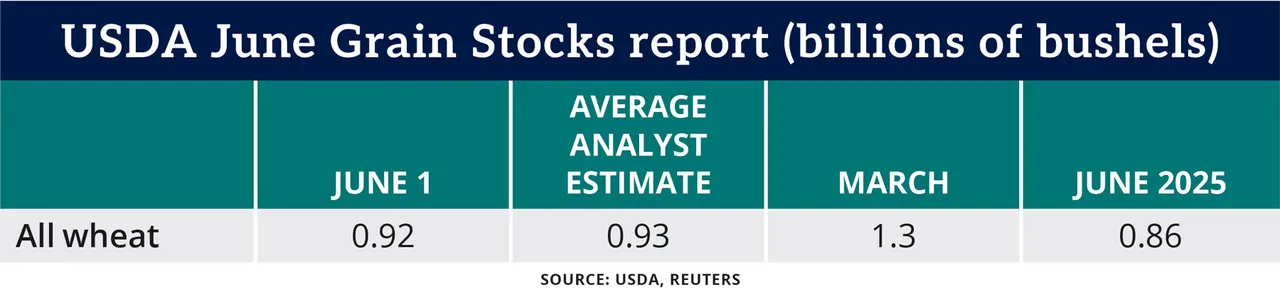
USDA also recently forecast that U.S. wheat stockpiles at the end of the 2026-27 crop year would drop 20% to 744 million bushels. But the just-revealed smaller plantings may force that number down to about 710 million bushels, according to a StoneX estimate.
The acreage and stocks numbers at the end of June spurred a brief rally and fueled ideas that the market may be near a winter harvest low after tumbling from two-year highs in May. September HRW futures traded around $6.33 per bushel before the July 4 holiday weekend, down from a peak at $7.58 in mid-May.
Watch for short rally
If the market can indeed put in a bottom and generate a summer post-harvest rally, wheat producers may be able to seize on some better pricing opportunities. But the same caveats apply: Wheat rallies tend to be short-lived as the U.S. prices itself out of global export business, and the recent strength of the dollar isn’t particularly helpful.
Nonetheless, the latest acreage numbers suggest wheat bulls have more room to run.
Based on the acreage report, wheat is “the cleanest bullish story by a mile,” said Iowa farmer and adviser Chase Koopmans on his Grain Ledger Rundown blog. “And there’s more to come,” he said, citing expectations USDA will cut wheat stocks in its July 10 WASDE report.
“The offset is the same old story — ample world supply, cheap Russian wheat, harvest pressure — so this isn’t a runaway,” Koopmans added. “But of the three crops, wheat is the one with a genuine fresh bullish story and the wind at its back. [HRW] is the leader to watch.”