August may be late innings for summer, but it’s really just a warmup for the biggest guessing game going on in the grain markets: Just how big or small are this year’s corn and soybean crops?
USDA’s Aug. 12 Crop Production report marks one of several attempts in coming months to nail down the number of bushels that ultimately will pour out of combines this fall. Because the August report is the first of the season to include yield and production estimates based on farmer surveys, it’s usually a major market mover. (About 15,000 producers were surveyed for last year’s August report.)
This year’s weather extremes, conflicting crop ratings and war disruptions have made getting a handle on harvest prospects particularly tricky. But good reasons exist to think U.S. soybean farmers will reap a large, and potentially record, crop.
Acreage surge
One reason is a sharp jump in acreage. In June, USDA raised its 2026 U.S. soybean plantings estimate by 665,000 acres from its March forecast to 85.37 million acres, up 5.1% from a six-year low in 2025. The acreage number likely won’t change in August. But arguably the biggest numbers will be average nationwide yields, which, combined with acreage, will provide some clarity on supply and price outlooks into 2027.
Over recent history, USDA has tended to overshoot with its August soybean yield estimates and then follow with downward revisions in subsequent months. That’s what happened the past four years, including 2025, when USDA’s August yield came out at 53.6 bushels per acre but was whittled to 53 bpa by January (still a record).
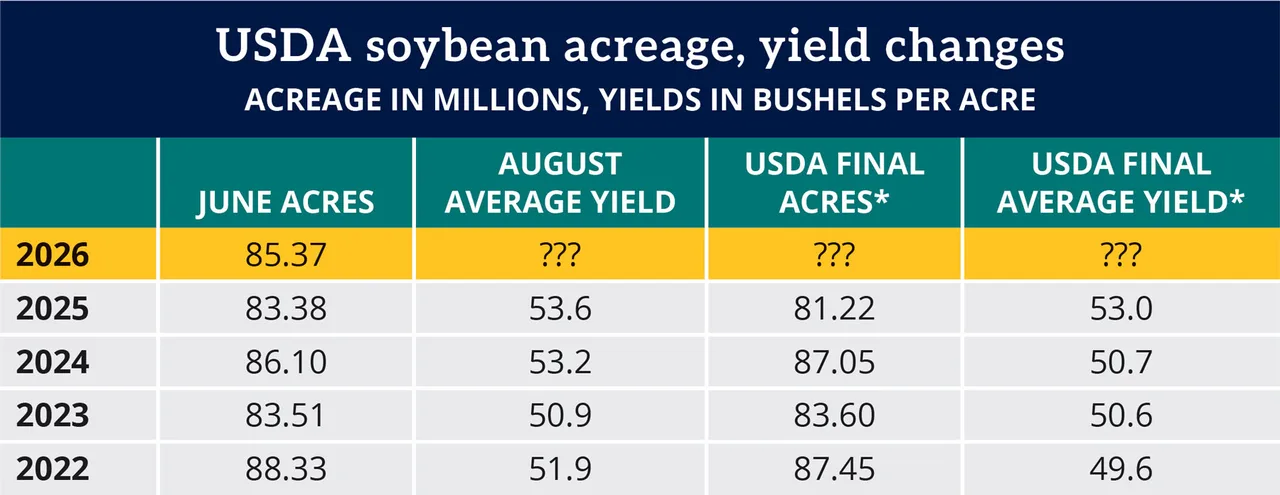
So far this year, USDA has stuck with a trend-line 53 bpa yield estimate for the 2026 crop. If that number or something close to it holds — a big if — that should be enough to generate a harvest around 4.47 billion bushels, slightly topping the current record of 4.46 billion bushels reaped in 2021.
That doesn’t mean supplies will be excessive or even comfortable, considering record crushing demand feeding a biofuels boom and China stepping up purchases of U.S. soybeans over the summer. Indeed, strong demand has given soybean bulls ample fuel to race past bearish acreage numbers and send November futures to 2½-year highs, nearly hitting $12.40 per bushel in late July.
Watch for price peaks
Whether such a price looks like a peak or a relative bargain by mid-August is anyone’s guess, considering all the geopolitical and weather uncertainty swirling around the market. It should be noted that July rallies are unusual, and the back half of summer tends to be a seasonally weak period for soybean prices.
Before the August report drops, farmers weighing pricing opportunities should keep a close eye on a few key factors:
Weather. Will Midwest heat persist into August and hamper the critical pod-setting and pod-filling stages, similar to what happened in recent years?
China. Will China continue to belly up for U.S. beans? The country had booked over 1.3 million metric tons of 2026-27 purchases by late July but has a ways to go to hit the 25 MMT full-year target touted by the White House.
War. Reescalation of U.S.-Iran hostilities in July ignited another rally in crude oil and diesel futures, driving a bullish price and demand structure for biodiesel. But as a quick glance at the charts tells you, oil prices will rapidly hit reverse on any ceasefire reports. Be careful about getting too attached to any rallies that require outside market help.