Goat farmer Hannah Sessions has a saying most farmers can relate to: “If something feels hard, maybe there’s an easier way to do it.”
Seasonal breeding of her goats led to an inconsistent milk supply, a big barrier to growing her artisan cheesemaking business year-round. Now, this Vermont farmer has found success milking her goats year-round, without interruptions from breeding or kidding.
Sessions teamed up with another Vermont goat milk farmer, Holly Menguc, on a study — funded by a grant from the Northeast Dairy Business Innovation Center — that looked at extended lactation in goats, keeping goats in milk beyond one year.
Results have been impressive. Some of their goats have continued efficiently milking for as long as two years, and some even more.
“There is an initial flush of milk when a goat is recently fresh, but after about six months, her production plateaus,” according to the final report from the study, which concluded in 2024. “It was our observation that in most cases, if the animal is not rebred, her production will continue on that plateau.”
The does on Menguc’s Tup’s Crossing Farm that were less than 50 days in milk produced 3.5 pounds per milking. Between 375 and 460 days in milk, they produced 2.75 pounds per milking.
On Sessions’ Blue Ledge Farm, the does averaged around 3.5 pounds at about 100 days, and between 300 and 500 days in milk (although the yearling does, less than 100 days in milk, would have traditionally lower production.)
Average lifetime production has not declined, and somatic cell counts have not risen. And both farmers have expanded their extended lactation programs.
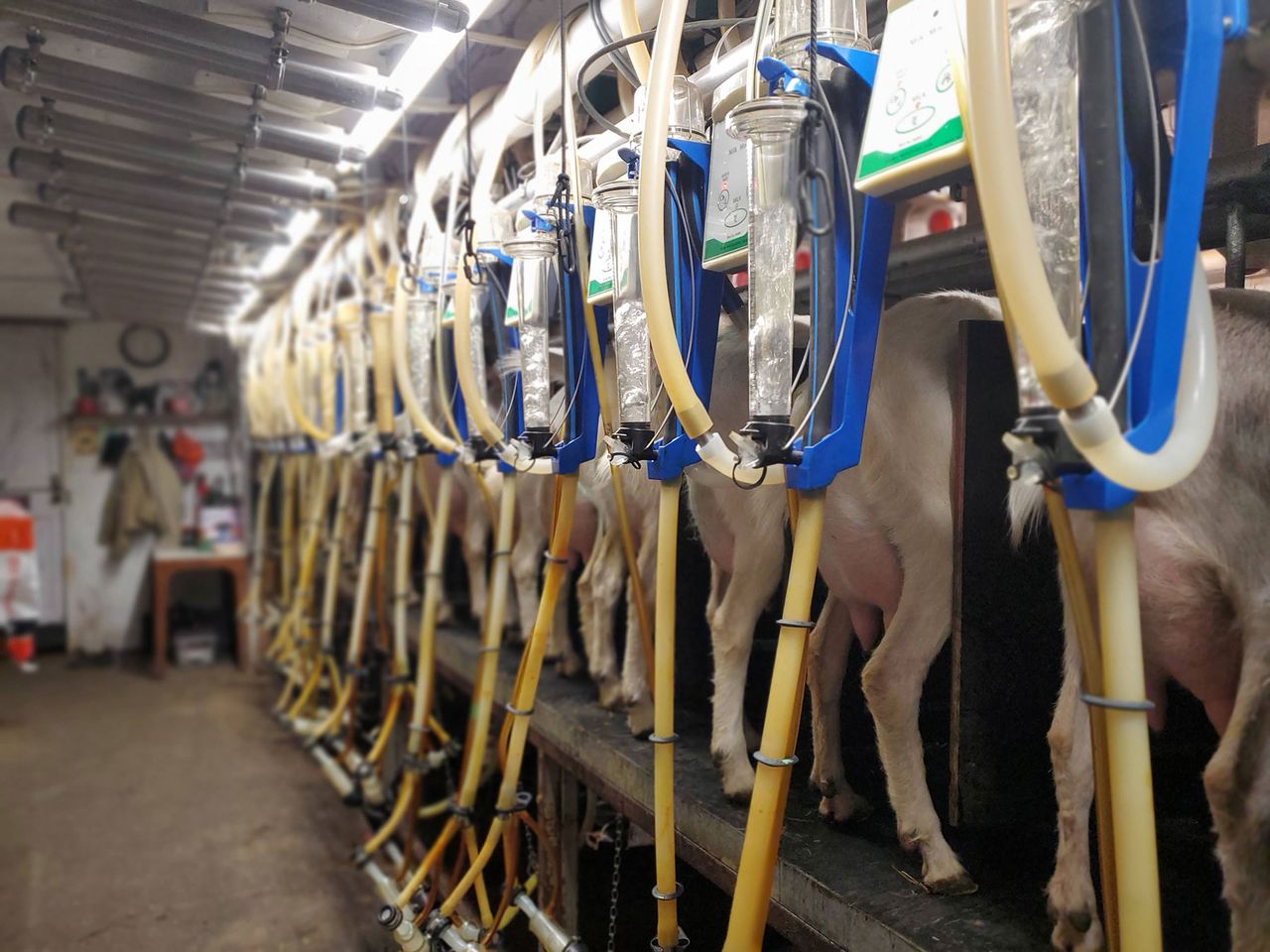
Different herds, same goals
The two farms differ in size and the product they produce, but they have the same goals: a more consistent milk, better use of labor and healthier goats.
Menguc runs a large commodity dairy, while Sessions runs a small farmstead cheese operation.
“We wanted to make sure extended lactation would work on a larger scale,” Sessions said.
She and her husband, Greg Bernhardt, were 23 when they started farming 25 years ago. They now have 175 goats on their farm in Salisbury, Vt.
The largest farmstead goat cheese producer in Vermont, they make about 60,000 pounds of their Blue Ledge cheese each year, distributing it nationwide online, as well as in stores across the Northeast.
Menguc, from Orwell, Vt., sells bulk milk from her 418-head herd to Vermont Creamery in Websterville, Vt.
They first investigated extended lactation in Europe, where the practice is common.
“We thought we would drop in production. But we had heard that, in Europe, production would drop but then plateau,” Sessions said, which turned out to be the case on hers and Menguc’s farm.
For both farmers, the more consistent milk supply has led to higher profits. Blue Ledge can produce higher-profit cheese year-round, and Tup's Crossing can get a higher premium for winter milk from Vermont Creamery.
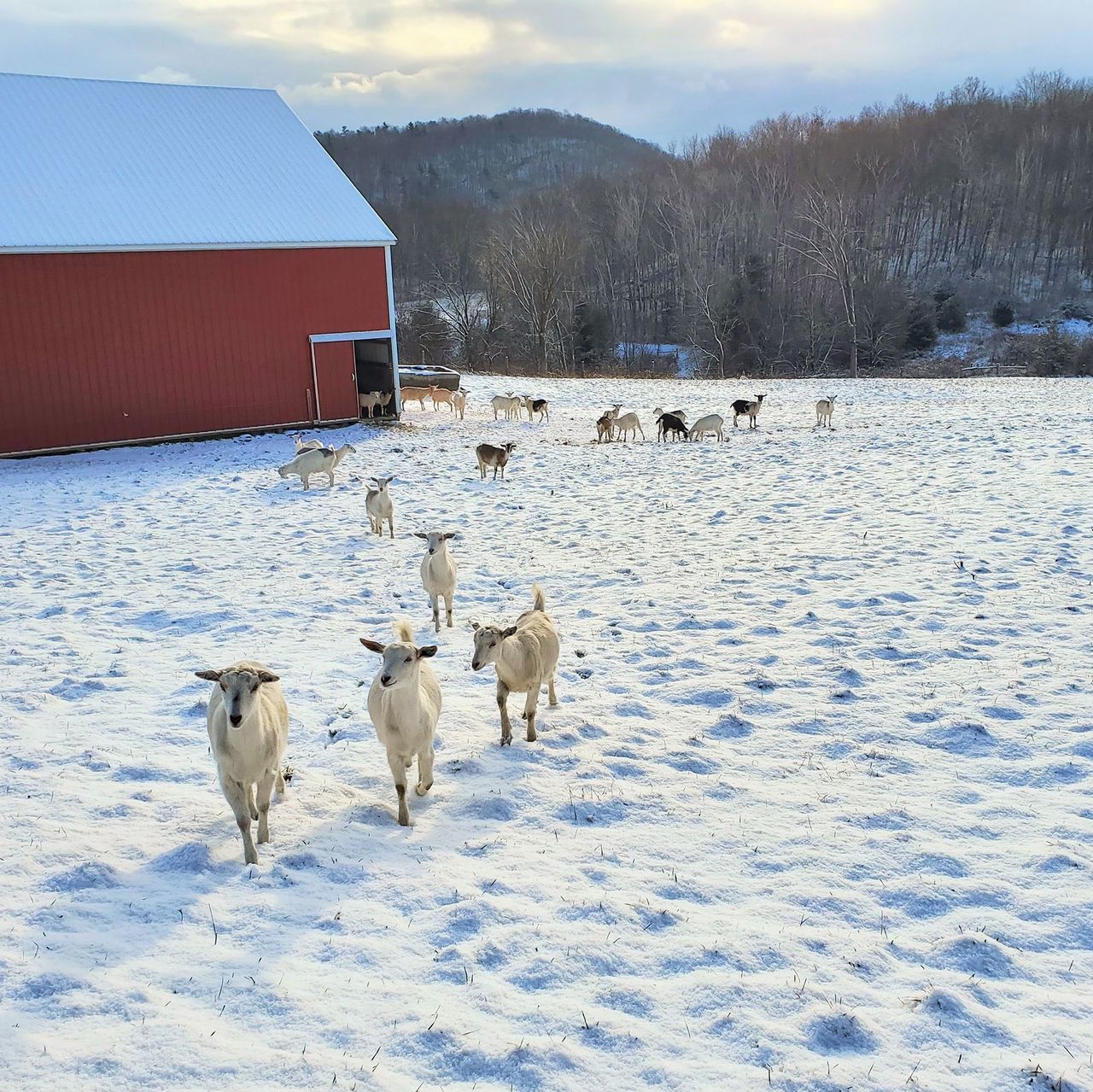
A welcome rebalancing
When she first started raising goats, Sessions saw that seasonal breeding produced an inconsistent milk supply — an unwelcome result for a cheese operation that relies on year-round sales and has a lot more kids at one time than it could handle.
“We tried freshening half the herd in fall and half in spring,” she said. “But some would freshen twice, and then four months in milk would be lost. Then there were the vet bills to pregnancy-check twice a year. We also had employees that needed year-round work.”
Extended lactation not only provides year-round milk, but solids content is also higher in the winter when goats are in the barn on dry hay.
“In the seasonal model, when all the goats freshened at the same time, it really made for a variable cheese,” Sessions said. “When the breeding is staggered, it makes for a more consistent milk and, therefore, better cheese.”
Menguc grew up in Vermont. After living in Chicago, she, her ex-husband and their two children moved back to the state in 2016. They looked at opportunities in the state’s lively food economy while working on a dairy farm in Orwell for three years.
“I was not warming up to cows the way I needed to, to work with them for the next 20 years,” Menguc said.
Curious about goats, she knocked on the door of a nearby goat dairy and asked, “What do you do here?”
She started spending her off time working on the farm, paid in kid goats. By 2019, she had bought a farm with help from Vermont Land Trust and contracted with Vermont Creamery.
“I had no background and no knowledge, but I found there were people and agencies — and a farming community — that very much supported me,” she said.
Vermont Creamery pays a premium for milk in the winter months, when it sells most of its cheese. Menguc runs two separate herds, each in their own barn. One herd kids in the spring, the other in the fall, with about 75% in extended lactation. Her current herd size suits her.
“That’s where I’d like to stay; that’s right for the infrastructure,” she said. “And I have enough labor now to lead a healthy life.”
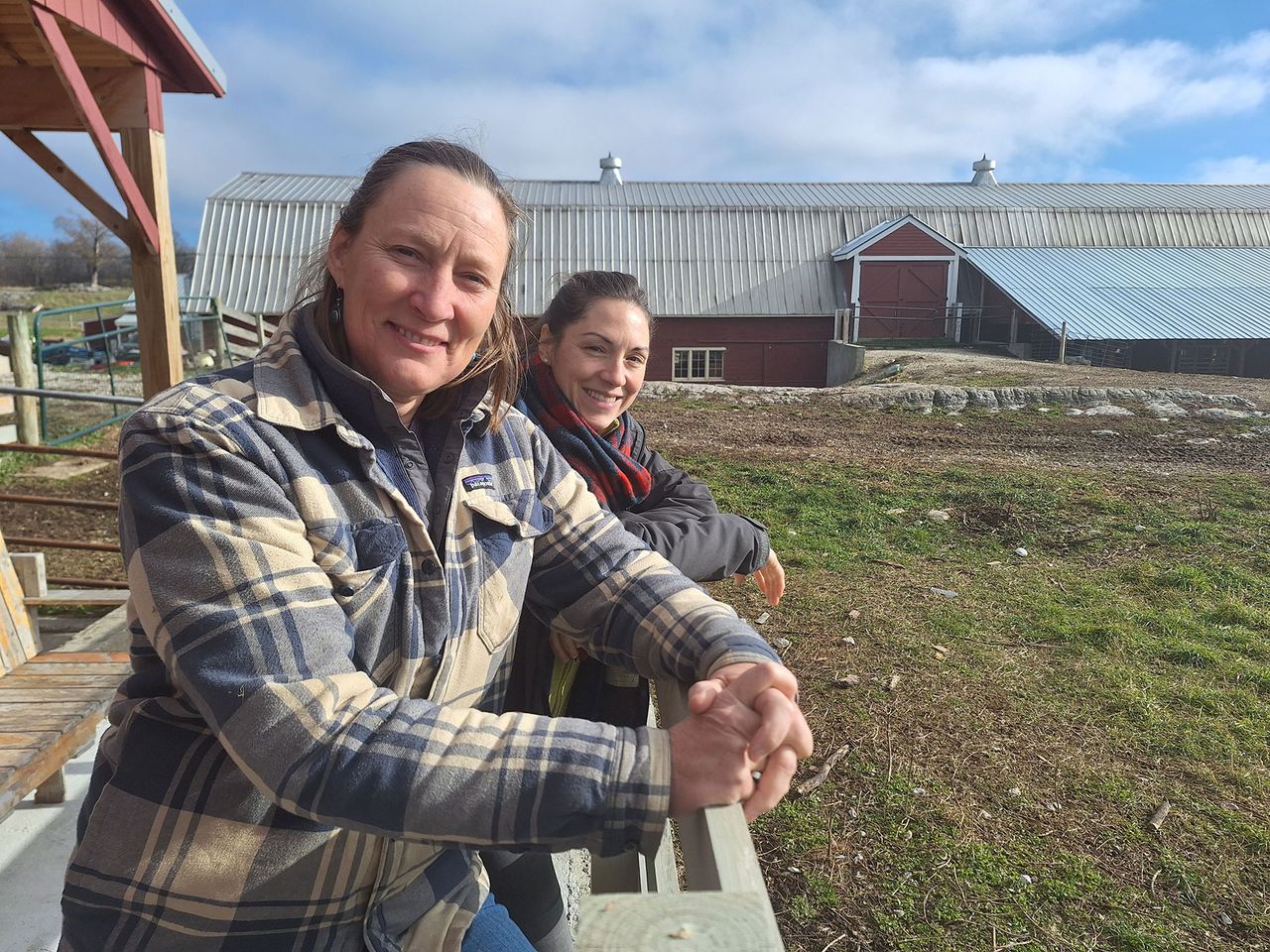
Managing carefully
Extended lactation demands more management during breeding season. Any goats needed to be bred must be separated from the rest of the herd, and records should be kept of what goats were bred and in what year. But it’s worth it, Sessions and Menguc said.
“A lot of work during the breeding season means a more manageable kidding season and, overall, a more profitable farm,” Sessions said in their report. “When you get older, you need to work smarter.”