USDA handed grain market bulls a gift in August in the form of an unexpectedly low U.S. corn yield estimate. But it came with a mysterious black box of sorts, filled with a bunch of additional acres the market didn’t expect.
Almost 1.4 million acres, to be a little more precise, were added to USDA’s corn plantings estimate in the agency’s much-anticipated Crop Production report released Aug. 12. A similar number was added to soybean planted acres.
Where did all those acres come from? The short answer is it’s not entirely clear yet. For now, here are a few takeaways from the first of several farmer survey-based reports coming in the months ahead aimed at ultimately determining the size of the 2026 crop:
Heat takes a bite out of yields. July’s scorching temperatures, especially in the western Corn Belt, took a toll on yield potential. USDA cut its estimate for average 2026 U.S. corn yields to 180.7 bushels per acre, down from 183 bpa previously and short of the average analyst estimate at 182.4 bpa. That’s a significant downgrade from last year’s 186 bpa record.
Exports jumped again. The world wants our corn, and lots of it. USDA raised its estimate for U.S. corn exports for the sixth time over the past year amid robust demand from Mexico and other top importers. Exports for 2025-26 are now seen at a record 3.4 billion bushels, up 75 million bushels from the previous figure. USDA also raised its 2026-27 export forecast by 75 million bushels, to 3.28 billion bushels.
Supplies grow snugger. U.S. corn supplies at the end of the 2026-27 marketing year dropped to 1.65 billion bushels, down 137 million bushels from a July forecast and down 15% from 2025-26. That clips the stocks-to-use ratio to 10.1%, a four-year low and below the 12% average for the past decade. The tighter supply outlook hasn’t escaped the attention of the grain trade, as evidenced by July 2027 futures trading above $5 per bushel as recently as mid-August.
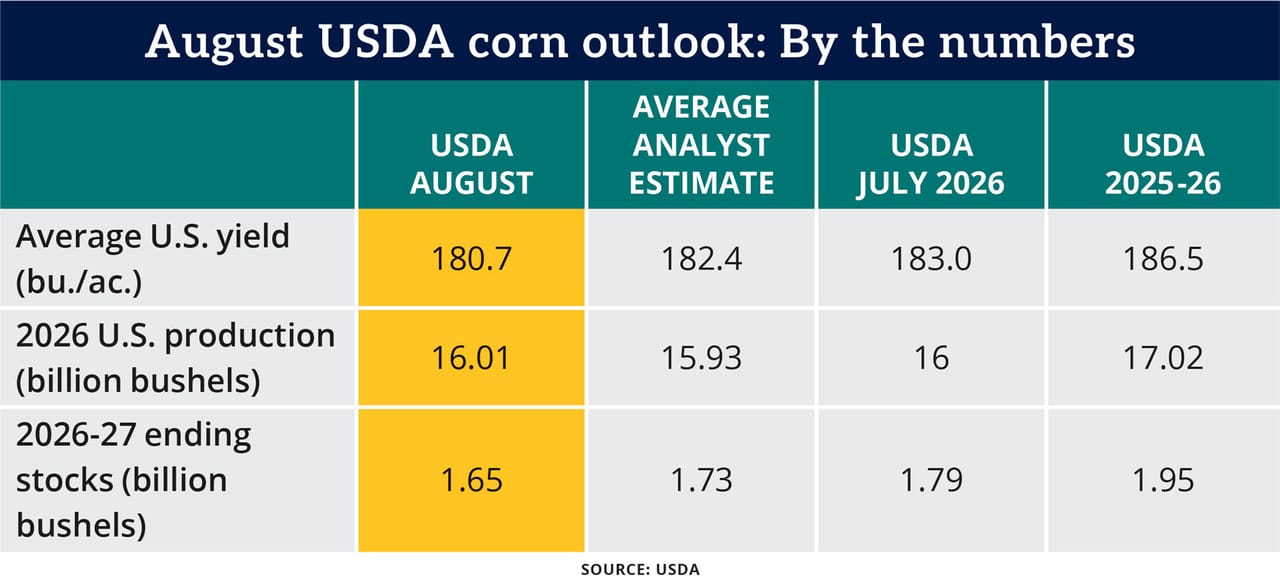
Examine those extra acres. USDA raised corn plantings by 1.39 million acres to 96.73 million acres — down from 98.79 million acres in 2025 but still the third biggest planted acreage figure since 1940. The higher plantings pushed the production outlook above trade expectations, with USDA hiking its corn harvest estimate 13 million bushels to 16.01 billion bushels, the second biggest on record next to 2025.
USDA didn’t provide specifics on reasons behind the higher corn and soybean acres. But it’s likely that acreage certification data collected by USDA’s Farm Service and Risk Management agencies in recent weeks showed farmers planted more of both crops than what was forecast in June.
Futures traders focused initially on the unexpectedly low yield figure, sending corn futures up over 20 cents shortly after the release of the report. (December corn traded around $4.73 as of mid-August.) But the acreage boost dampened bulls’ ardor somewhat, adding yet another twist to what’s already been a volatile year for markets and farmers.
One thing’s for sure: The story of the 2026 crop season is far from written. USDA’s subsequent Crop Production reports (the next one is Sept. 11) could provide more clarity. In the meantime, strong demand and shrinking supplies offer farmers a couple of reasons for optimism as another growing season winds down.