Spreading manure on corn just days before chopping it for silage breaks every conventional timing rule, and Paul Mason thinks that's exactly why it might work.
His thinking: A late-season nitrogen boost could squeeze extra tonnage from his corn into his cows’ mouths.
"With silage, you don't give it the full time for grain fill,” Mason said. “So, I want to max out the half that is filling grain. At least that's my theory.”
It's unconventional and unproven, but the payback could be huge for this Chester County, Pa., dairy farmer. Better feed quality, more milk and higher components could lead to fatter milk checks and a more positive bottom line.
“That’s why I’m going to be sending lord knows … lots of forage samples out, to try to see if I can figure something out,” Mason said with a laugh.
Having the right tool to experiment with is key. In Mason’s case, it’s a 360 Rain unit that he bought two years ago with help from Penn State. His goal was to cut down on manure-hauling costs and to get away from front-loading nutrients before planting.
But it’s opened the doors to precision crop management that he never thought possible, from late-season nutrient applications to variable-rate spreading based on field conditions.
"Having the right tool was the first step,” Mason said. “Now it's about, 'How do you write the playbook?' And we're just in the beginning stages of writing the playbook.”
The setup
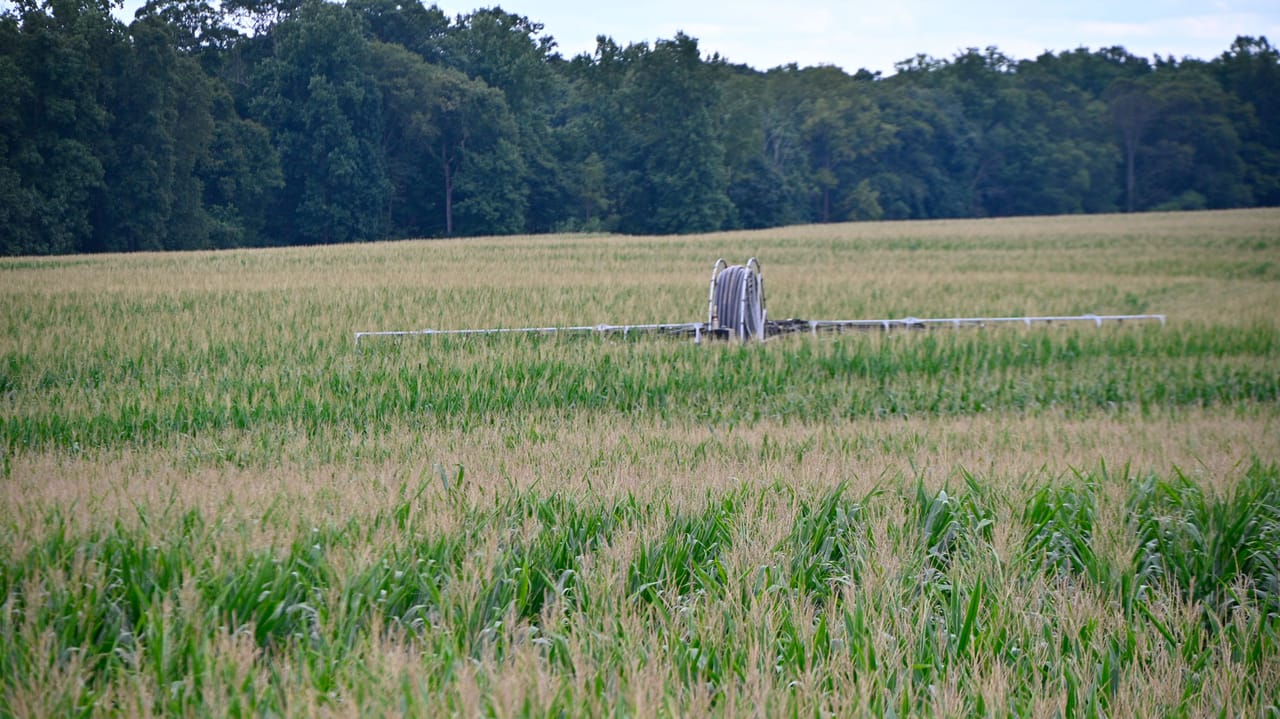
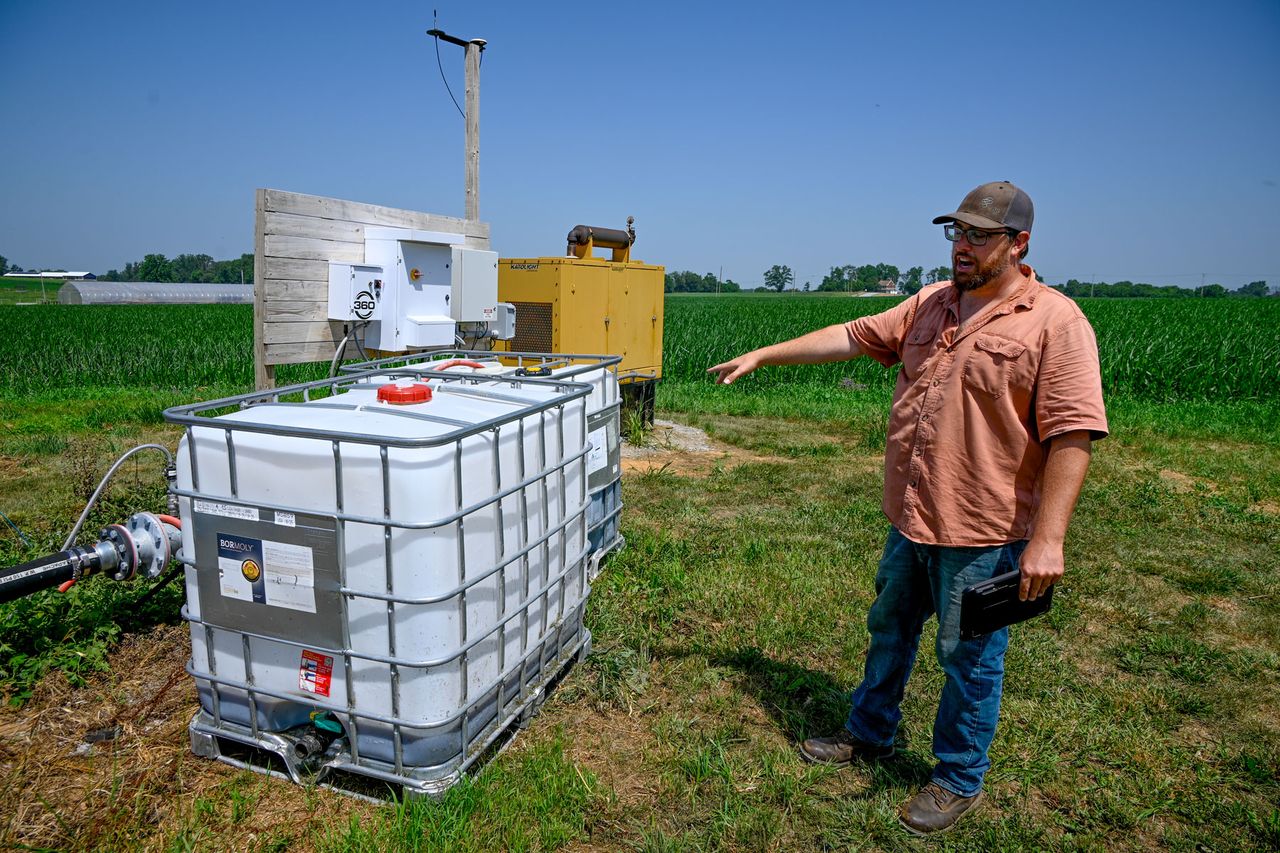
360 Rain units run autonomously in a field and can be adapted for either irrigation or manure applications. Mason runs his unit in a 160-acre field that’s connected to his farm’s 2 million-gallon manure lagoon via underground pipes.
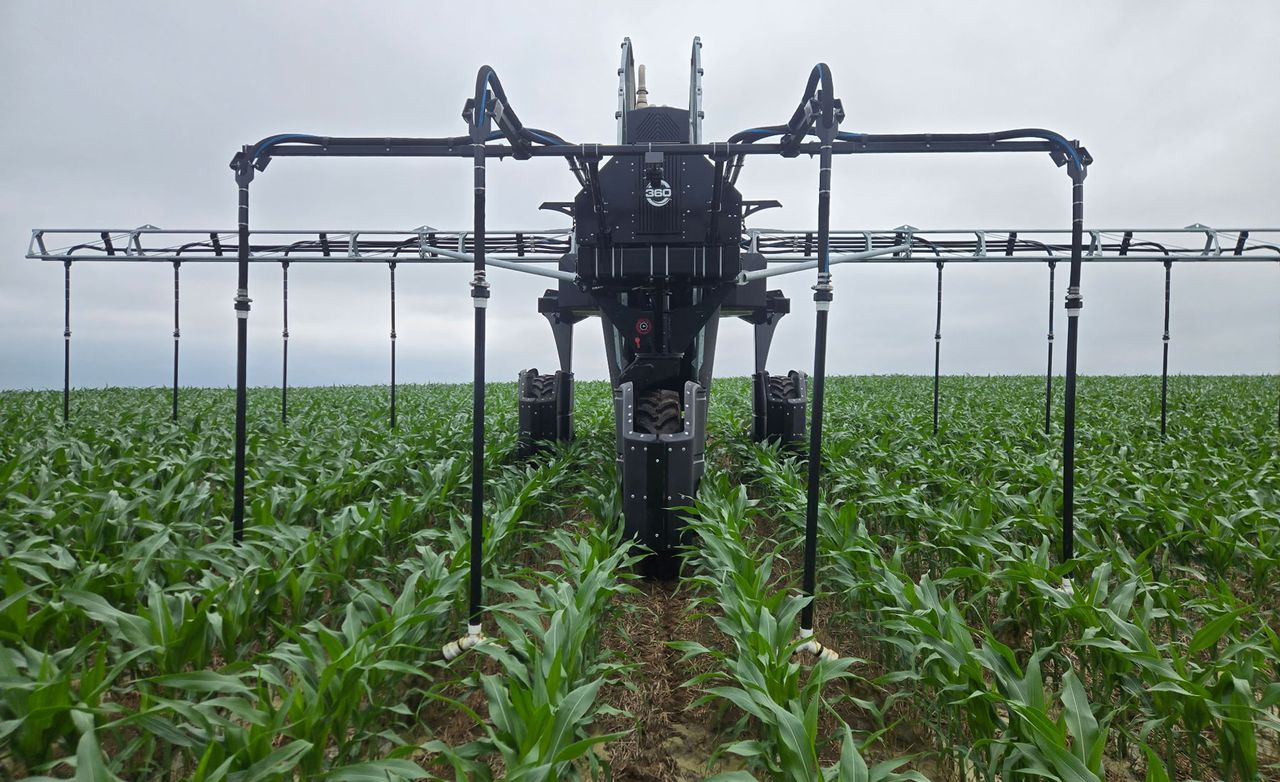
It runs by following the path of the corn planter that’s programmed into it. Mason hooks the unit’s hose — it holds 3,000 feet of 2- to 3-inch hose on a reel — to a riser in the field and lets it run at just under a half-mile an hour. It covers 25 acres daily — roughly a week for the entire 160-acre field.
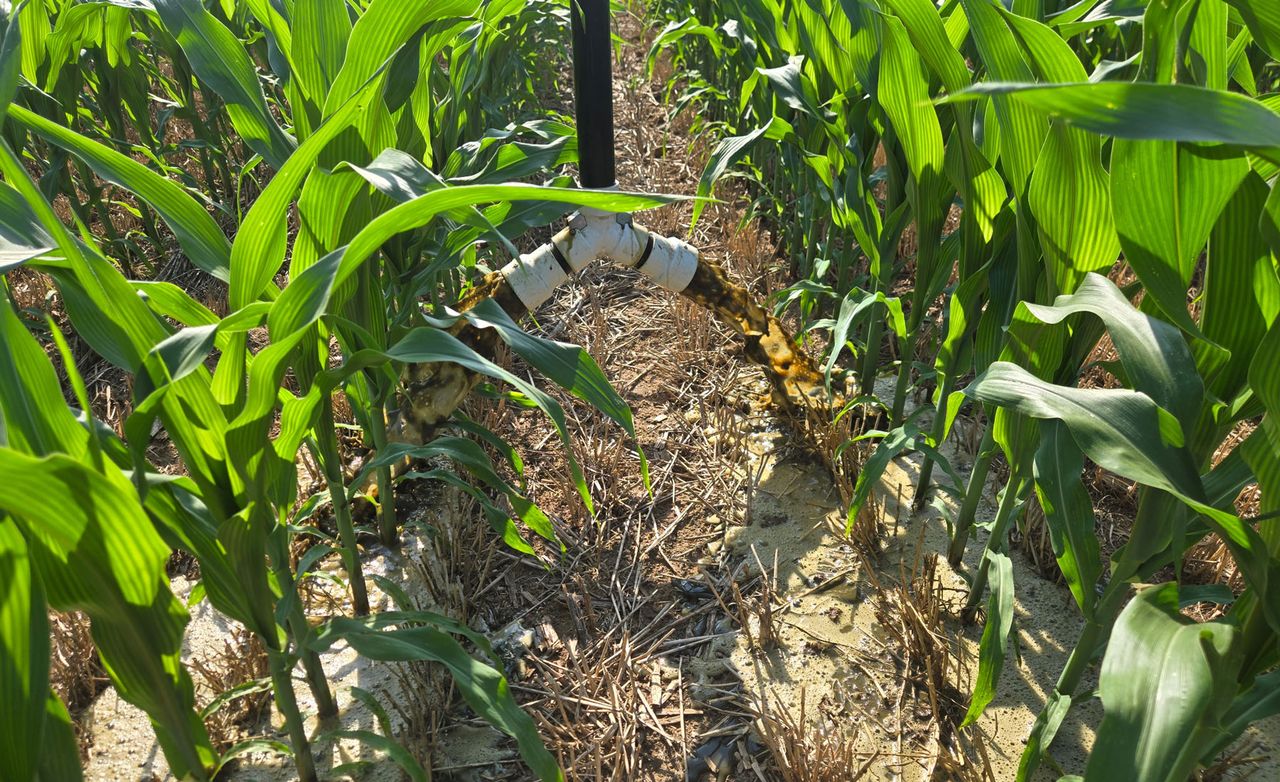
It is equipped with 12 Y-drops that spread manure right next to his corn, two rows at a time.
By partnering with Penn State on purchasing the $225,000 unit, it enabled him to get a Climate Smart Agriculture (CARAT) grant to help pay for it. In exchange, Penn State agreed to measure manure emissions from the field.
Growing playbook
Mason ran three manure passes with the unit this season: at V6, V8 and a third pass right at corn denting.
He said the machine has already paid for itself by cutting his manure-hauling costs way down.
“Instead of having to haul manure, plant, do all those things at crunch time in early spring, now I can time my manure applications to when the plants actually need the nutrients,” Mason said.
Now, he wants to go further to not only optimize yield, but also improve silage quality. This season, he ran a dozen trials to see how various nutrients and crop products interact with manure, and how it affects crop quality.
One trial was a sulfur test where he injected sulfur into the system and compared it to a control. The goal? To see if it would convert manure to a source that’s more plant-available quicker.
Another test he did was of a biological product, BioKast, that he said breaks down the organic portion of nitrogen faster.
“So, maybe I can get more of that accessible in-season, especially on those later passes, so I don't have the same amount of time for that organic portion of the nitrogen to break down as quickly,” Mason said. “I wonder if that'll help accelerate it, so I have that availability earlier.
"I keep making it more complicated. It's a problem. I'm like an addict," he added.
Last season, he ran his third application at brown silk. When he measured it to a control, he said it increased overall dry matter by about a half-ton per acre. Did it improve crop quality, which he measures by overall tonnage, tons of digestible starch and tons of digestible neutral detergent fiber in the feed? No, not yet.
But it’s the fact that he can do this in the first place that gets him excited.
“It allows me the opportunity to play with different products to help break the manure down, or stabilize it, or buffer the manure to try and improve that in a more economical way than — in my mind — just throwing it out there before you plant and hoping that nitrogen is still there three months later,” Mason said.
Finding synergies
Eric Rosenbaum, senior agronomist with Rosetree Consulting, said most farmers use machines like 360 Rain to better manage their manure storage. But finding synergies with other technologies, such as manure aeration, is key to finding an even bigger payoff in the long run.
He equates it to using cover crops in a no-till system.
“If you’re able to stack that with an application technology that's going to allow you to do in-season applications, or you're going to stack that with a dribble bar application for topdress on small grains, I definitely see that there's going to be an adaption of this technology over the next couple of years,” Rosenbaum said.
But these new technologies don’t come without potential issues. In the case of the 360 Rain units, Rosenbaum said they can be tricky to maneuver on contours. When not used properly, they can also lead to overapplication of nutrients.
“It’s going to lead to problems because it can be so easy for an overapplication,” he said. “So, talk to your planner, get them involved early, do a lot of in-season testing.”
Glen Arnold, manure nutrient management specialist with Ohio State, said farmers should be wary of potential nutrient volatilization issues. His advice is to apply manure when the corn is taller, as the plants can trap some of that volatilization.
A tool, not a magic bullet
Mason said he can’t run the unit across his entire farm. He farms 700 acres in Pennsylvania and Maryland, and many of those fields don’t adjoin and are not close to the home farm. So, manure is still being hauled, but synthetic fertilizer is also being spread.
Mason said the CARAT grant helped pay for half the unit’s cost, but the rest of the grant he was promised is in limbo after the Trump administration canceled the Biden-era Climate Smart Agriculture program last year.
Still, he said he would have bought it even without the grant.
“It's a project I would have done probably just because of the upside,” Mason said. “I mean, the payback was roughly four years without the grant. But with the grant, it's like two years. So, anything in that three- to five-year window is usually a go for me.”
For farmers willing to do something different and try new things, Mason said it’s a good tool, but temper your expectations.
“But if you're expecting to just magically have something happen better, it's not going to be that easy,” he said. “You've got to be open to looking at something a different way, doing something different, and committing to learning that new thing.
“Don't expect someone to come in with a new technology and just say, 'All right, ‘you're going to do A, B, C and D, and this is going to happen.’ It's going to be up to you.”