Have you heard the joke about the banker who was happy when a business lost $50,000 in a month?
That’s because it had been losing $60,000 a month, David Bower said jokingly. He’s co-founder of Homestead Creamery in Wirtz, Va.
The founders of Homestead Creamery and the company’s current owners embrace the luxury of being witty about the worries of yesteryear because of their success today. Their multigenerational dairies are moving into a new generation, and retail business is tracking their goal of $25 million in net sales in 2028. Sales in 2025 were $18 million.
But that wasn’t the case in 2001, 2002, 2003 or 2004 — the first four years the creamery was in business. That wasn’t the situation when their Farm Credit lender gave an ultimatum regarding paying their debt and showing a profit — letters that arrived twice, once in 2004 and again in the COVID-19 years. And that certainly wasn’t the outlook the day Bower made a mayday call to Dave Kohl, a professor emeritus at Virginia Tech and a well-respected financial management expert.

The farmers who came together to find financial stability for their family dairies suddenly had to make money their priority.
“It’s not about the money — but we weren’t making any,” said Donnie Montgomery, a co-founder and past board chairman. He laughed when he said that but then grew serious.
Ultimately, Montgomery looks across the years and sees a pattern that started with those early conversations. “I always said it was a God thing because it all just kind of evolved,” he said.
The timeline for that evolution goes like this:
- 1999. Sixdairymen decided to own the next business in the supply chain that brought milk to families in their corner of Virginia.
- 2004.Those farmers called in an outside consultant and investor because they were losing $40,000 to $60,000 a month.
- 2005. Homestead Creamery made a profit for the first time: $13,927.
- 2010. The creamery netted $5 million.
- 2020. COVID-19 hit. The business lost $600,000 in receivables and $1.6 million in revenue.
- 2025. In December, Homestead Creamery had more sales in one week than it made the whole first year in business.
- 2028. The goal is to top $25 million in revenue.
Road map to success
But like the dash between dates on a tombstone, it’s not the milestones that tell the story of this dairy that didn’t die. The story is in the actions taken by the farmers who refused to let it die. And what they did provides a road map for farmers who want to either diversify or move into the next step in their supply chain.
“This thing has been a laboratory of life, of entrepreneurship,” Kohl said. And for those who listen to Kohl speak as he crisscrosses the country each year, Homestead Creamery is often the example he holds up — usually for what to do, rather than what not to do.
The lessons apply to any business. Here are six of them:
1. Write and follow a business plan. Bower and Montgomery are two of six farmers who, in 1999, started talking about processing their own milk. Milk checks were inconsistent. Dairy farms across the country were in financial trouble. Headlines about dairies were more often about multigenerational farms going out of business.
Opening Homestead Creamery in 2001 didn’t make anything better. “Farmers are hard workers, but we’re typically not businesspeople,” Bower said.
The creamery’s leadership now holds a business retreat and writes an annual business plan — every year. The first one, written in 2005, was titled “Operation in the Black,” and it felt aspirational. The copy they keep in the office is dog-eared and dirty. It was consulted often. They hit the goal that September of that year.
2. Know your numbers. When Kohl came into the business, he figured out how much volume needed to move through the company’s plant to make money. Together, the owners created a 10-point plan to achieve their goal of being profitable. Eight of the points focused on efficiency and two on growth. They had to lower fixed costs, and they needed to budget intensely.
“It took that 10-point plan, and we all took ownership of the numbers,” Kohl said.
Sometimes they had to take the emotion out of their decisions.
“The yogurt was hard to cut. It was so good. But we weren’t making any money on it,” Montgomery said.
“It was costing us $1.66 for every $1 of yogurt we were selling,” Kohl said. “That’s why budget analysis is so important.”
3. Focus on people and processes. “We get the right people, put the people in the right spot and let the processes work,” said Walt Frazier, president of Homestead Creamery. “We don’t even think money. We think people and process. If you take care of those things, the rest will follow.”
That means writing and following an employee handbook. It means paying attention to culture changes. It means knowing your people. It means remembering that 10% of your employees give you 90% of your problems.
“You have to get them out of your way if they keep making your life miserable,” Frazier said.
For the dairies the creamery contracts with for milk, Frazier said, they look at competence, work ethic and caring.
“We’re going to pay more to get that,” he said. “And we do not care that we’re paying more. We just set a high bar and expectation for the best milk that money can buy.”
They also use the same language in each grower contract, require exclusivity, and provide the contract price and premium opportunities in each 12-month contract.
And they avoid being insular in their leadership and their staff. Having an outside adviser is important. Bringing in people from other industries is essential.
4. Protect your reputation. A good reputation builds on itself. For Homestead Creamery, that means quality milk, full compliance with all regulations and a commitment to their faith.
On that last, the founders and the dairies involved in the creamery are German Baptist. One of the ways they show their faith is with a bit of scripture on their glass bottles of eggnog. Some customers wouldn’t order eggnog because of that.
“So, we didn’t take the scripture off the bottles,” Montgomery said. “We just gave them different bottles.”
A reputation for consistent quality and strong compliance and performance increases business opportunities. These days, Frazier is taking calls from across the country for businesses that want wholesale contracts. In 2001, the founders were fighting to put their milk in Minit Markets, a convenience store chain.
5. Know your market. The dairy market quickly moved from traditional yogurt to Greek yogurt about the time Homestead Creamery opened its doors. When Amazon came in, home delivery for milk and other products — for which an expanded product line was in their business plan — became too competitive for a small business.
And they didn’t initially plan to offer ice cream or have a store. As their knowledge of the market grew, and as that market changed, Homestead Creamery moved with it.
“We finally decided that we needed to focus on the three things we do best. That was milk, ice cream and butter,” Montgomery said.
That is, until Montgomery had the idea to add lemonade. Kohl wasn’t alone in thinking it was “the dumbest idea I ever heard.” The board, however, decided to try it. Lemonade sales in 2025 were $1.2 million.
6. Defy arrogance, bureaucracy and complacency. Nobody is really too big to fail. And the leadership team subscribes to Warren Buffett’s belief that the bigger a business gets, the more prone it is to the ABCs that lead to failure: arrogance, bureaucracy and complacency.
A prime example is the automobile industry in the 1970s. “They were thinking money first. When you get that mindset of money first, you will cut corners,” Frazier said. “If you’re in the business to make money, it won’t work. You’ve got to be in business to make a difference. The money will come.”
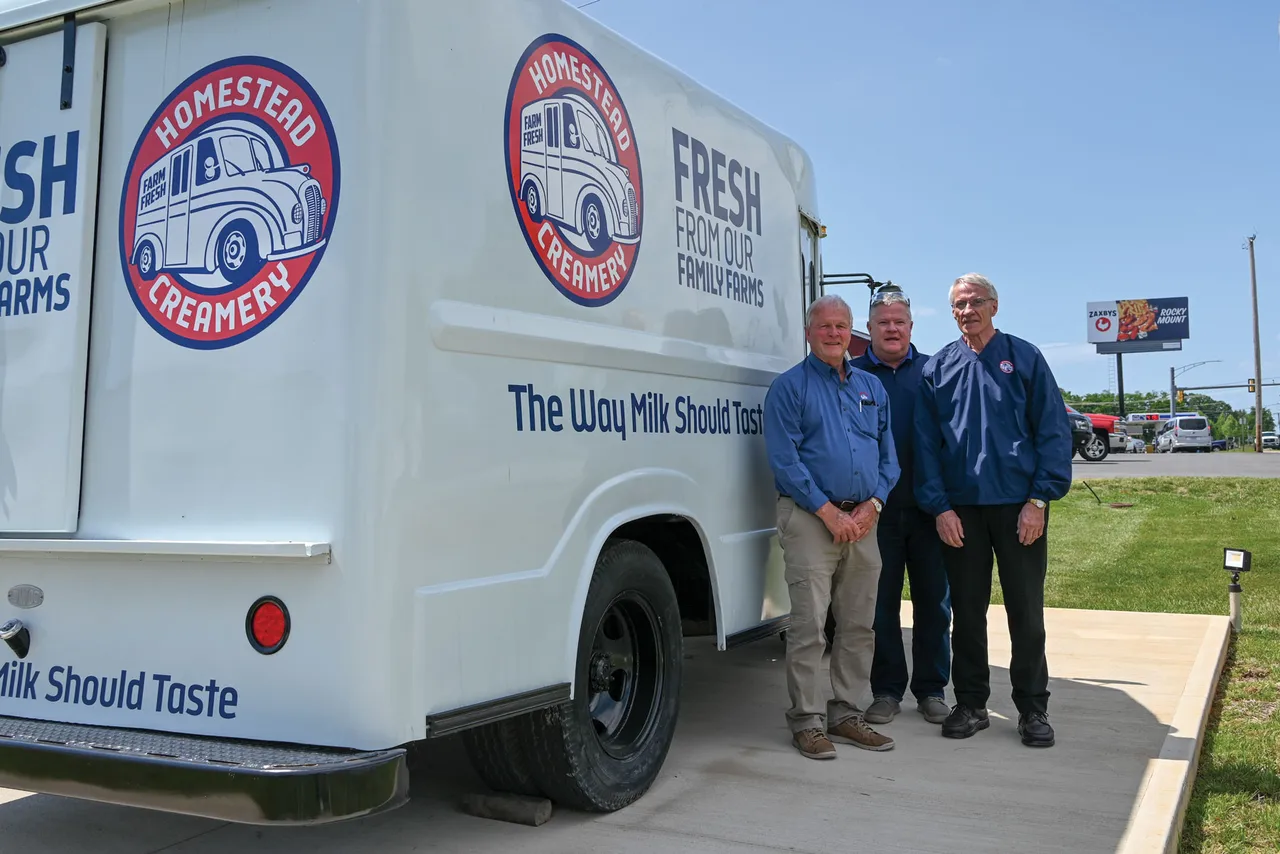
Farmer to farmer: Tips for starting a new business
Montgomery and Bower refused to let Homestead Creamery die, recommitting to their new business over and over. But they know it could have been easier. Here’s their advice for other farmers who launch a side business:
Montgomery: “Just make sure you’re committed for the long run and don’t stretch yourself too much on capital when you start planning for your venture, so you have enough capital to get through the startup and get yourself branded.”
Bower: “Make sure you have a really good marketing plan. Make sure you have a really strong operations plan and management team. And you have a really strong mission and values that you follow through before you get $1 million in debt and have to figure out how to make it work.”