USDA thinks U.S. farmers will harvest a record soybean crop this fall. So, is the possibility of $14 beans kaput? Think again.
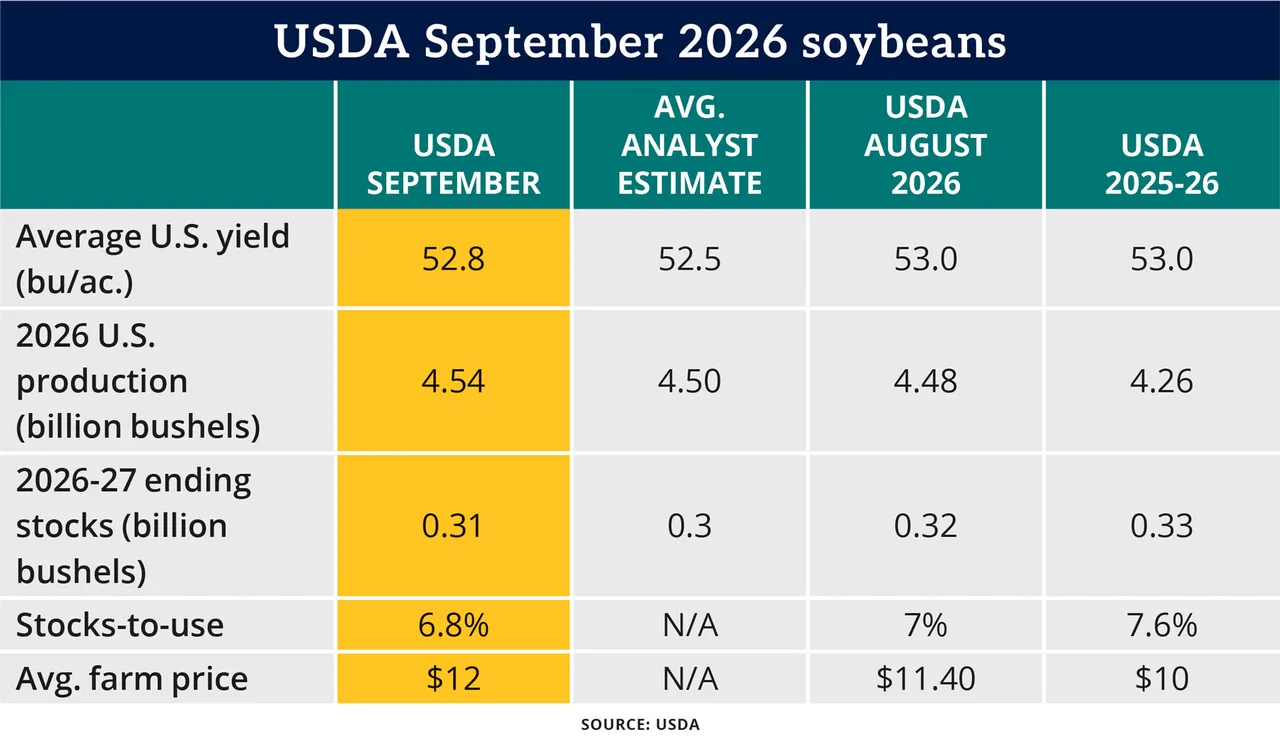
In a recent batch of crop estimates, USDA unexpectedly raised its forecast for the soybean harvest to 4.54 billion bushels, which would knock 2021’s 4.46 billion-bushel harvest off the top perch.
That’s a lot of beans. Dig deeper, however, and the numbers suggest the soybean market’s summer bull run still has legs that could carry it into 2027: namely, record demand and shrinking stockpiles.
USDA on Sept. 11 cut its forecast for this marketing year’s soybean ending supplies to 310 million bushels, down 4.6% from 2025-26 and a four-year low. That pushed the stocks-to-use ratio to 6.78%, the lowest since 2022-23. That’s significantly below the 9.5% average of the past decade.
A widely followed barometer in ag markets, the stocks-to-use ratio measures expected ending stocks as a percentage of total annual consumption. A declining ratio signals a shrinking supply buffer and greater vulnerability to disruptions from war, weather and shifts in demand. Declining ratios are also correlated with higher price volatility.
Put another way, the U.S. will have about 25 days of soybean stocks at the end of the 2026-27 marketing year next summer, down from 28 days at the end of 2025-26, based on USDA’s projections.
Supply gauges like stocks-to-use bear watching as fall harvest accelerates and a strong El Niño raises concerns over global crop shortfalls. A shrinking global grain and oilseed supply outlook is part of a potentially explosive mix that includes ongoing disruptions from the Middle East and Russia-Ukraine wars. For U.S. soybeans, China’s recent buying binge, if it continues, also plays into bulls’ hands.
In 2022-23, when the stocks-to-use ratio dropped to 6.1%, soybean futures hit a peak around $15.55 per bushel in February 2023 and then took a mostly downward path the rest of the year, ending just under $13. The average farm-level cash soybean price climbed to $14.20 in 2022-23 as U.S. production dropped two years in a row following 2021’s then-record harvest.
Prices may dip at harvest
Soybean futures have retreated a bit after hitting a 2½-year high above $13.30 around the time USDA released its numbers. The $14 handle seems far off now, but advisers like Jon Scheve, owner of Scheve Grain, believe longer-term potential exists for a run above $14, or even to $15. The operative adjective here is “longer term.”
Over the near term, farmers need to be wary of further price pullback as fall harvest fills the pipeline. Managed money funds hold a massive net-long position in soybean futures and may be keen to book profits. And again, it looks like a record crop is coming. Capitalizing on the late-summer rally and locking in new-crop sales seems prudent.
A $14 soybean market may or may not happen. But the latest round of USDA numbers does offer encouraging signs following the depressed prices of recent years.
The soybean market took the USDA numbers “in stride,” Scheve said. “We’re still coming in with a carryout that’s going to be as tight as last year, if not tighter. So that’s not bearish. I think this is a solidly long-term bullish scenario for beans.”