George Polzin finds it somewhat ironic that he got started in farming because of a bull that injured his father and later found success in the profession in part because of bulls that he raised and sold on the farm.
George has been active in farm organizations and as a member of the town board, school board and church council. He helped turn a traditional family dairy into a well-diversified operation known for its quality genetics.
When George was attending University of Wisconsin-River Falls back in the late 1970s, his father, Lloyd, was injured by a bull, resulting in two weeks in the hospital in intensive care and long-term recuperation. With his mother and younger brother at home, George knew what he had to do. He left college and went home to keep the Century Farm running.
Learning from others
George didn’t have a lot of experience with how to manage the crops, but he knew cows, so he relied on a network of neighbors and agricultural experts to help him fill the knowledge gap.
“I have to give a lot of credit to the neighbors and our county ag Extension agent, Cal Kraemer, for really helping me when I needed it,” George said. “I don’t think I could have done it without them.”
He eventually took correspondence courses to finish his Bachelor of Science degree at UW-River Falls while farming full time.
The Polzin family raised registered Guernseys when George was young, but when the Guernsey Association decided to open its herd book to allow its members to use Red and White Holstein bulls, Lloyd took advantage of the opportunity and bred the entire herd to that new bloodline. The Guernsey group later decided to discontinue the association with Red and White Holstein bulls, so Lloyd made the switch to all Red and White Holsteins.
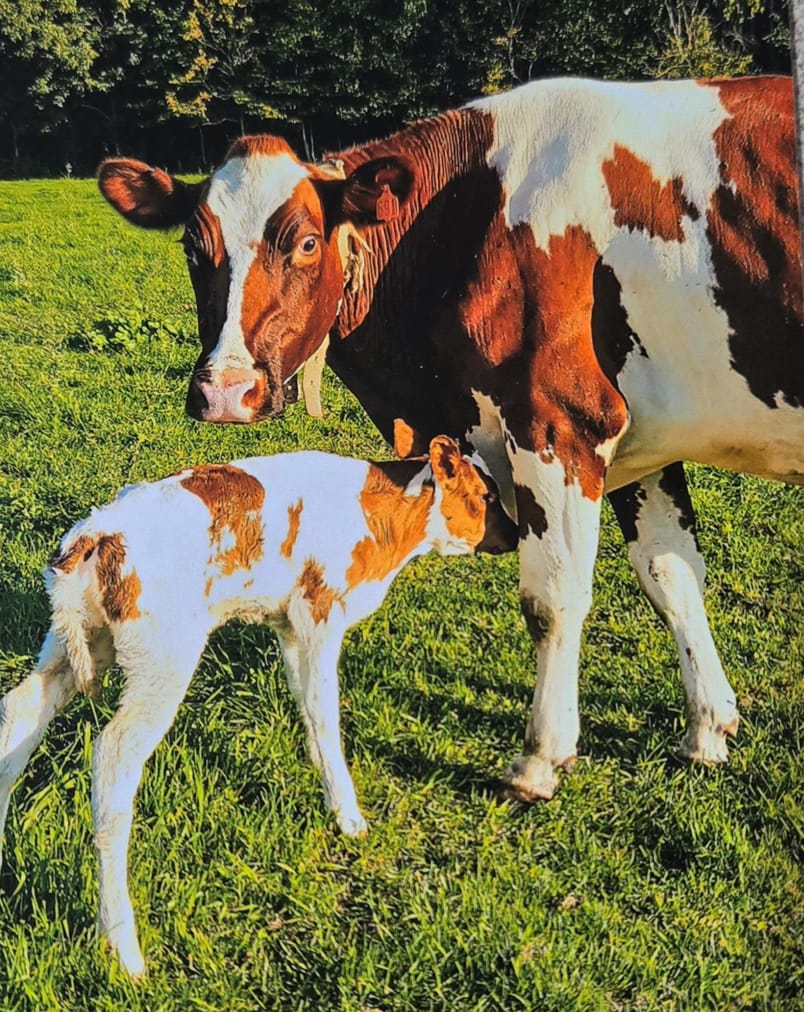
George, 70, recalls attending an auction in Fond du Lac, Wis., when he was young with the intent to buy a Red and White Holstein bull. The bulls that sold that day were out of his price range, but he went home and told his dad that maybe they should raise a few bulls to sell to others like them who couldn’t necessarily afford the higher-priced animals.
“We decided to raise 10. Ten turned into 20, 20 turned into 40, and the most we ever sold in one year was 72,” he said. “We were selling genetics all over the Midwest.”
Bull sales
“We couldn’t have survived in farming without that income from bull sales,” said Marie, George’s wife. “We made more in bull sales some months than in milk sales.”
Marie also contributed to the household income by working as a rural mail carrier for more than 20 years.
A few years after he began raising Red and White Holstein bulls, George was attending a Wisconsin Farm Progress Days Show in central Wisconsin when he stumbled upon an opportunity to raise Normande bulls. He decided to buy a couple Normande bulls from a farmer in Denmark, Wis., and came home with a Normande cow and calf after they caught his eye.
“That cow ended up being national champion a couple times, and her daughter was also a national champion,” he said. “It was just luck that we purchased her when we did. After that, we sold a fair amount of Normande genetics.”
Almost all of the Normande animals George sold went to organic graziers, since Normandes are bred to eat grass.
“That kind of opened my eyes that there is no right or wrong way to do this dairy farming — there are only different ways,” he said.
George and Marie milk about 70 cows with the help of one full-time employee. Over the years, the Polzins housed 13 foreign students from all over the world.
The Polzins don’t know what the future holds.
“George plans, God laughs,” George said with a smile. “It’s getting harder. The silos are getting taller, the silo doors are getting smaller. The hardest part of my entire career might be deciding how and when to end it.”
Next generation
Their son, Leonard, dairy markets and policy outreach specialist for UW-Madison for the past 3½ years, lives 12 miles away with his wife, Teal, and their son, Lloyd. Teal is the statewide Farm Pulse Project coordinator for UW Extension, specializing in crop insurance and grain marketing.
George and Marie’s daughter, Gena Lilienthal, is also involved in agriculture. She met her husband, Christian, while serving as Wisconsin FFA state president nearly 20 years ago. At the time, Christian was the Minnesota FFA president. They met at the White House in Washington, D.C.
Gena helped develop an award-winning agriculture education program in St. Peter, Minn., before taking time off to raise their four children. Gena and Christian operate a crop and beef farm in Minnesota alongside Christian’s parents and brother, and also operate Wild Things Zoo Attractions, a professional animal care and education outreach company that provides hands-on learning experiences and exhibits for schools, fairs and community events throughout the Midwest.
Like Gena, George and Leonard were also state FFA officers in their day.
Diversified farm
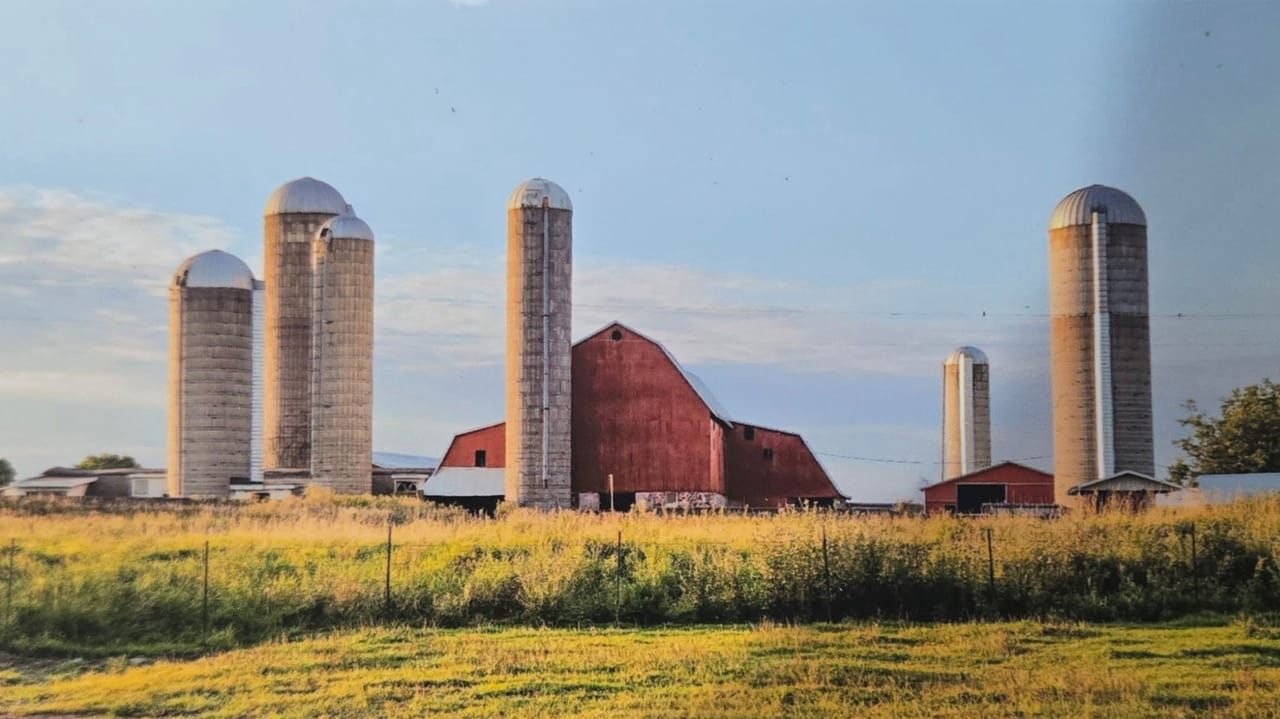
George and Marie sell about half of the hay and corn they grow each year and all of their soybeans. Their 565-acre farm has been in the Polzin family for 125 years. Their crops last year included 283 acres of alfalfa, 172 acres of corn and 70 acres of soybeans. The remainder of the farm is in woodland.
Although crops are an important aspect of the farm’s diversification, the Polzins say the best crop they ever grew on their farm was Gena and Leonard.
“We are very proud of both of them, to be able to say they both continued in agriculture careers,” George said.
The Polzin farm consists of contiguous acres, and they have animal-housing facilities on three different farms. They have purchased neighboring farms as they became available.
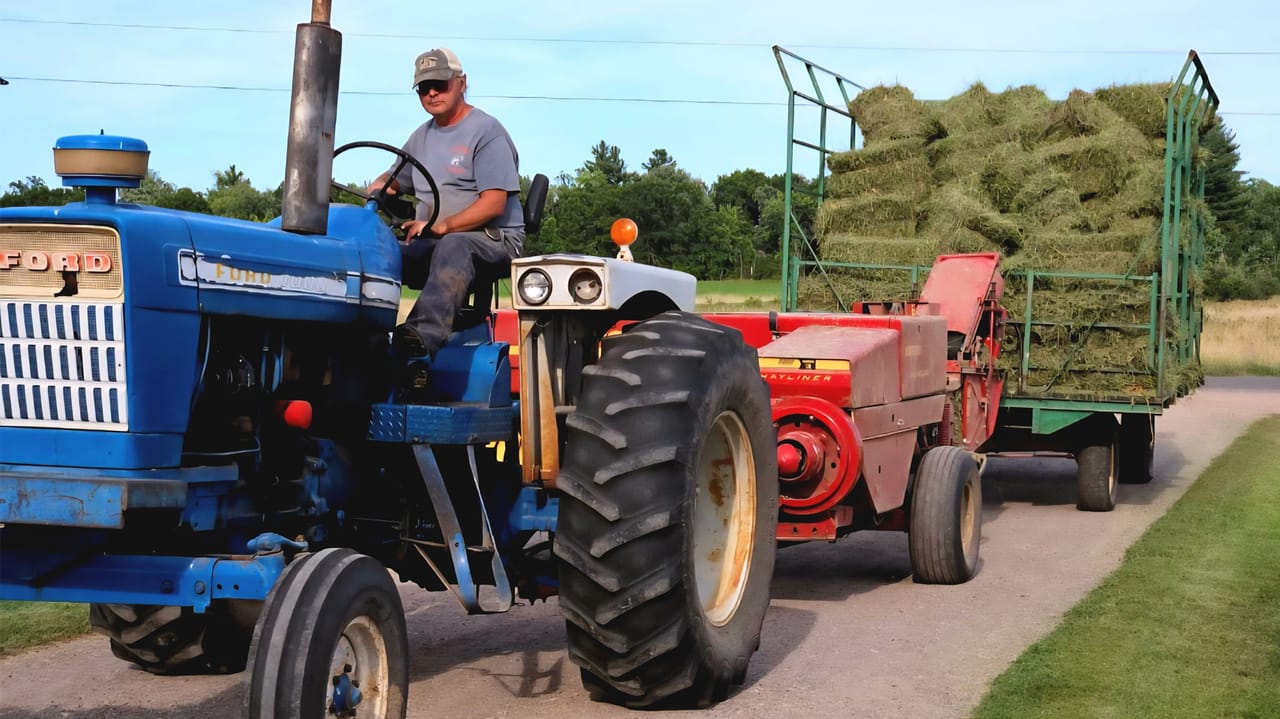
“My dad always used to say you don’t want to buy all the land in the county, just the land that adjoins yours,” George said.
Leonard notes that his dad and grandfather were successful in farming because they always “did the math” on all of their farm ventures.
“I was trained since I was about 3 years old in dairying,” Leonard said. “All my dad and grandpa did all the time was math. For everything.
“When you’re feeding cows in the barn, how many pounds are in a scoop of feed? What is the current price of that feed? Why one scoop? When it comes to the harvest and you’re hauling bushels of grain, how many miles per gallon are you getting on your truck? How much does it cost per day to get a bull to a salable age? When you grow up doing the math on everything, everything should be rational and should make sense. The wheels are always turning.”
George said he learned how to be frugal in his spending and never bought anything he couldn’t pay for. He says he had good hired help over the years and also saved money by trading out space with a mechanic — Francis Dachel — who has a farm machinery repair shop on the farm.
“I don’t know if Grandpa did it deliberately, but he was forcing us to constantly think about everything,” Leonard said. “When you routinely do the math on everything, when it comes to the time to make a decision, you’ve already looked into it. It makes those opportune decisions much better and helps avoid the downside risk.”
George said his way of farming has resulted in him becoming somewhat of a “dinosaur” in the dairy industry, as herd sizes continue to get bigger.
“At one time, we were the largest herd on our milk route; now, we are the smallest,” he said. “Small farmers can’t just compete on putting milk in the tank. They have got to have some kind of niche. For us, it was selling bulls, but that’s not much of a niche anymore, because there are so few farms.”
George says he tells people he didn’t get far in life, as he lives in the same house where he grew up.
Golden era of family farms
“Getting an award such as this is kind of humbling and very unexpected,” George said. “I don’t feel that I’m the best at anything. I’ve been very lucky. I was born with a golden pitchfork in my hand and expected to learn how to use it at a young age. My timing was excellent. I farmed during what I call the golden era of family farms. Unfortunately, I think that era has kind of come to an end.”
Leonard, who makes a living analyzing dairy policy, believes the consolidation in the dairy industry will increase “exponentially” in the next five to 10 years.
“The economic impact of dairying is still large in Wisconsin, and it will continue to be,” Leonard said. “But there will continue to be expansions, and farm numbers will continue to decrease.”