Bob and Josh Hiemstra of Brandon, Wis., milk 120 Holstein cows and raise 135 beef-on-dairy cattle on their diversified farm in western Fond du Lac County. The 69-year-old father and 49-year-old son have farmed in partnership for the past 26 years.
Josh’s son, Mason, 21, and Bob’s brother Arlin work full time on the farm, and Savannah Stahmann and Josh’s daughter, Cassandra, work part time. Scott and Tami Kelnhofer help with fieldwork and fill in when needed.
The Hiemstras recently began custom-raising 260 Holstein dairy heifers for a nearby dairy. They also farm 800 owned and rented acres of cropland where they grow corn, alfalfa, soybeans, wheat, canning peas and cover crops.
Getting started
The Hiemstra farm was purchased by Bob’s parents, Nanno and Alice, in 1969.
“We moved here from Walworth County,” Bob said. “My parents bought 216 acres, the farm and one house. The barn had 49 stanchions. A second house was built on the farm in 1977.”
Bob farmed with his parents on shares until 1981 when he and his late wife, Darla, purchased the farm, machinery and his dad’s half of the cows.
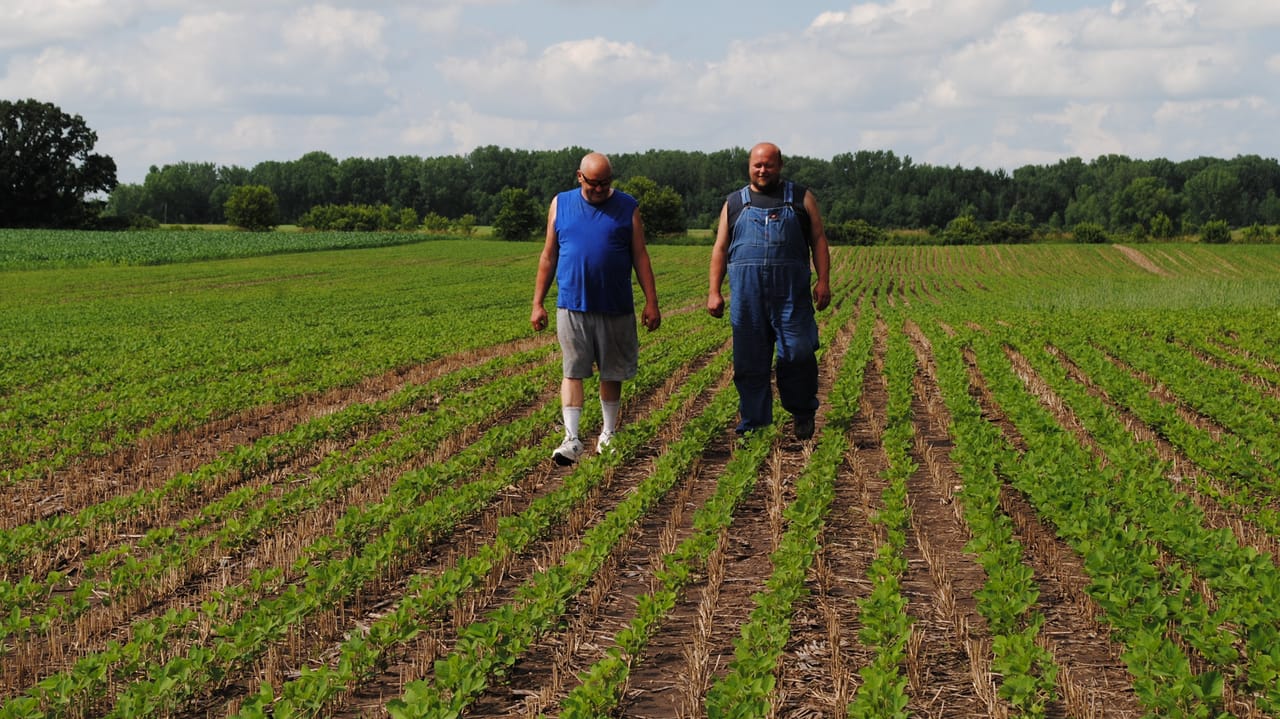
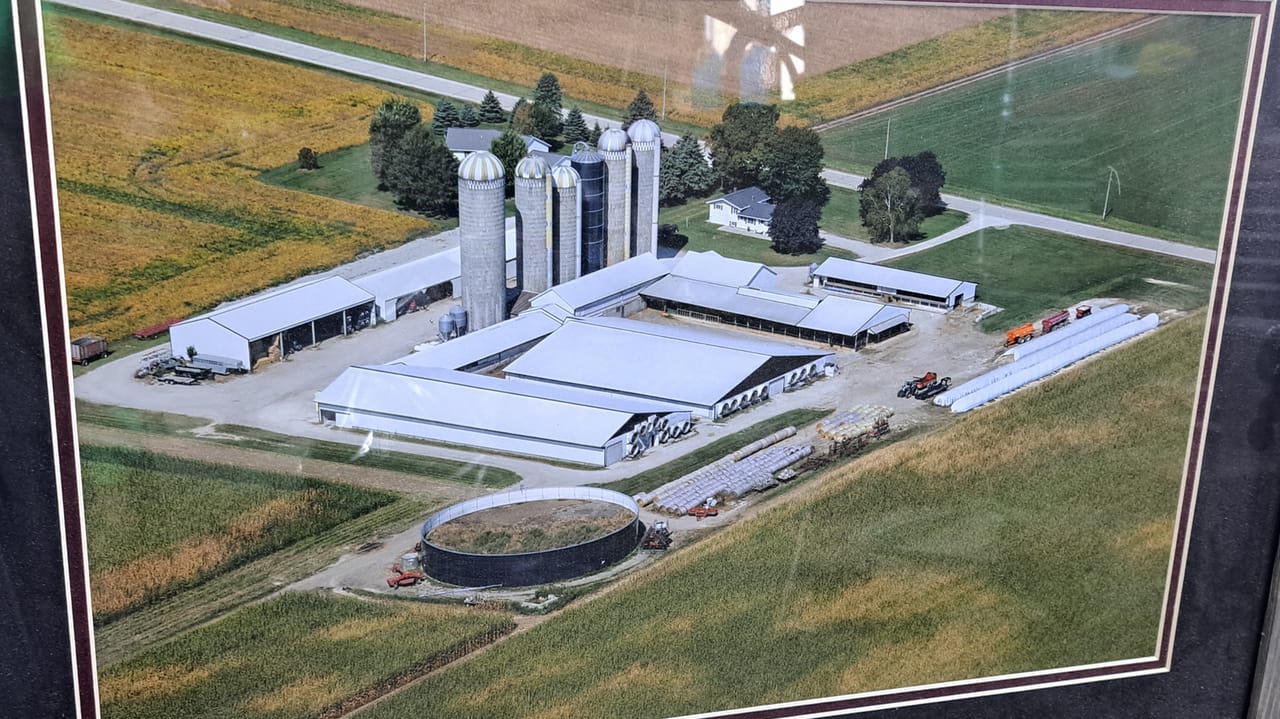
Josh graduated from Laconia High School in Rosendale, Wis., in 1995. He attended Fox Valley Technical College in Appleton, Wis. Shortly after Josh formed a partnership with his dad in 1999, a decision was made to expand the dairy from a 95-cow tiestall barn to a 145-cow freestall dairy. Much of the planning was done in house. In preparation for the expansion, replacement calves were purchased and raised so no money was borrowed for cattle.
“After the expansion, we were able to modernize the facilities with proceeds from selling extra fresh Holstein cows,” Josh said. “We also began to keep Holstein bull calves and raise them to 300-pound feeders.”
Permanent feed and long-term manure storage were added as well. Equipment was replaced with larger, more efficient equipment to allow for more land to be rented. Josh and his wife, Bobbie, also purchased 50 acres of cropland in 2020.
“With our facilities focused on efficient feeding, cleaning and milking, we were able to start selling forage to other local farms,” Josh said. “We also were ahead of the curve, shifting from selling replacement dairy cattle to dairy-on-beef cattle. We added some cows and a finishing enterprise.”
Recently, the Hiemstras decided to downsize both the dairy and dairy-on-beef enterprises a bit and diversify further by adding custom replacement dairy heifers, custom planting, manure hauling and forage harvesting.
Their 120 Holstein cows average 85 pounds of milk per cow per day with a 4.3% butterfat test, a 3.15 protein test and a 150,000 somatic cell count on two-times-a-day milking. Cows are housed in freestalls on mats bedded with straw. Tunnel ventilation, long-day lighting, headlocks, alley scrapers and floor grooving have all been added to enhance cow comfort.
Replacement-fresh 2-year-old and 3-year-old Holstein cows are purchased from local dairy farmers.
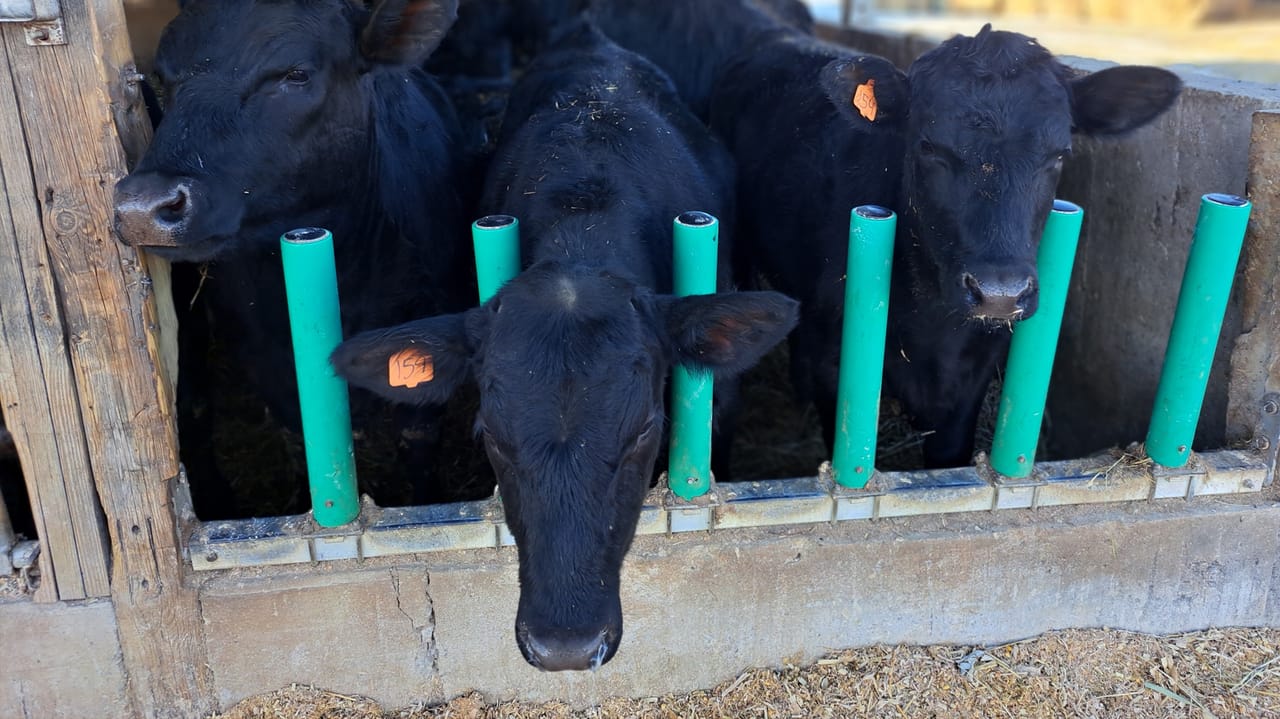
“It takes 14 to 15 months to get our beef-on-dairy cattle to market weight — about 1,500 pounds,” Josh said. “And we sell them for $3,200 to $3,600 each. I can turn around and buy fresh dairy Holstein cows as replacements for the same price. It takes 24 months to raise a Holstein heifer to freshening.”
All Holstein cows are bred to Angus bulls using activity monitors and artificial insemination. Heifers are also bred with activity monitors, with excellent heats being observed since using monitors, Josh said.
All the dairy-on-beef calves are finished with homegrown forages and marketed both commercially and as freezer beef. About 105 are finished per year.
The 260 Holstein replacement heifers are custom-raised.
“We receive calves weekly, usually four to six of them, and we raise them until they are 60 days pregnant, then they go back to their home farm,” Josh explained. “We are focused on clean pens with soft bedding and quality ventilation. Good forage has led to average daily gains over 2.5 pounds per day.”
Cover crop advocate
Over the last 19 years, Josh has grown cover crops and experimented with them both as a soil enhancer and as feed for dairy cows and heifers. Josh is frequently asked to speak to a variety of farm groups and at conservation meetings across Wisconsin about what he has learned about cover crops.
“Cover crops can be a great alternative feed source for dairy cows,” he said. “Thinking of cover crops as another annual forage can help growers better manage them on their farms.”
Josh has found that, while cover crops are an investment, feeding them is the best way to get a return on that investment.
“Building consistency in forage is important. If we can do better with the soil to bring diversity of feed to the cows, it’s a win-win situation,” he added.
Last October, Josh planted 120 pounds of rye to the acre on 40 acres.
“If you are going to seed rye for feed, you need to seed it heavier than you would for just a cover crop,” he said.
He plans to chop the rye for feed for the heifers when it is ready in mid-to-late May.
“Then I’m going to double-crop those 40 acres,” Josh said. “I will plant soybeans no-till on it.”
They plan to feed the ryelage to their older heifers.
“We avoid feeding our older heifers our good haylage. We need that for the cows and young heifers,” he explained. “But we have fed ryelage to the cows in the past. It makes great feed. You just have to harvest it early. If you are feeding it to older heifers, it can be harvested a little later.”
In addition to growing cover crops for feed, Hiemstra says he seeded rye on all their soybean and corn ground last fall.
“I seeded it at 60 pounds per acre. Rye is the hardiest cover crop to seed in the fall,” he said. “I have seeded it in early November and it still comes up.”
A diverse crop rotation helps with crop stress. Corn for grain and silage, soybeans, winter wheat, green peas, alfalfa-clover-grass hay cocktails, forage cover crop cocktails, small grains cover crops, and grassy hay buffer crops are grown.
Soil health a priority
“We farm with a biological focus, with soil health and water quality being our utmost goals,” Josh said. “My mother [Darla] passed away in early 2025 of cancer. Her cancer battle inspires our family to continue to produce nutrient-dense, high-quality food. We do not use insecticide or fungicide in our crops, with soybeans, wheat and cover crops planted using only inoculants and no insecticide or fungicide seed treatments,” he said, adding that crop amendments are carefully selected. Soybeans are no-tilled green into rye.
“While not regenerative, we focus on nutrient retention, stopping soil erosion, improving infiltration and trafficking. We have drain-tiled most of the needed areas on land that we own. We have two Conservation Reserve Program strips. One is for pollinators with the newest being constructed with a scrape [pond] for waterfowl.”
A grass waterway was also constructed to curb erosion. Since 2001, Josh has written all nutrient management plans. The Hiemstras plant all their crops and harvest all their forages. They also harvest forages for two other area dairy farms.
“We don’t own a combine,” Josh said. “We hire someone to combine our wheat, soybeans and corn for grain. We like chopping our own corn silage and haylage so we can control feed quality, but you can hire someone to combine wheat, soybeans and corn for grain, and it doesn’t affect the quality.”
A priority for Josh and Bob will be to make Mason a partner in the farm, which is a limited liability company, and for Bob to begin the process of retiring after more than 55 years of working on the farm.
Josh and Bobbie’s daughter, Cassandra, will graduate from Laconia High School in June. She plans to attend Moraine Park Technical College in Fond du Lac, Wis., next fall and get a degree in cosmetology. After graduation, she plans to become a manicurist and work at her mother’s beauty salon, The Blind Beautician, in Rosendale, where Bobbie is the hair stylist. Bob’s daughter, Starla, is not involved in the farm but lives and works nearby in Rosendale, where she manages MSI Express, a food ingredient packaging company.
“Our plans on the farm are to remain flexible, and it depends on what beef prices are, what milk prices are and what crop prices are,” Josh said.