What prompts an entire farm overhaul to transition from conventional to fully organic? Above all, putting health and business opportunities first.
For Jody and Crystal Manuel of Harlowton, Mont., a family health scare led them down this path, where they have found success.
“My family homesteaded in the Flathead Valley in the 1880s,” Jody explained. “Then my grandfather homesteaded with his own family, where we farm today, in 1917.”
The Manuels run a fifth-generation cow-calf operation. In the early 2000s, they switched from conventional cropping systems to an organic, regenerative system.
Residing on the edge of a mountain range, the couple explained that almost two-thirds of their acres are too hilly to be farmed, so they consider themselves “mostly” ranchers.
In the late ’90s, Crystal started experiencing health problems.
“It seemed like all of a sudden I was sick,” she explained. “I lost about 35 pounds in one month. I lost all the hair on the perimeter of my head. My heartbeat was excessive. My temperature was dysregulated. So, I sought medical advice.”
Health uncertainties
After a misdiagnosis of adult-onset asthma following her first appointment, Crystal underwent more tests. While waiting at home to do a certain blood test for doctors who wanted to confirm her asthma diagnosis, her eyes fell to the bookshelf.
“It was a gift from what we call my ‘hippie’ aunt, and I had forgotten about it until now,” Crystal explained. “It was called the ‘[Prescription for Nutritional Healing].’ I had never read it, but on this day, I knew I didn’t have asthma, and I felt like I needed to see what I could come up with.”
Still sick, Crystal sat down with the book, flipped through page after page of diseases and symptoms, and read about how nutrition can help.
“On Page 211, I finally found my symptoms, and I diagnosed myself with Graves’ disease,” Crystal said. “When I saw all my symptoms, I looked to the other side of the page, and that was where our whole life changed.”
She read the word “cabbage” under the list of foods to eat for Graves’ and said she immediately had an intense craving for cabbage.
“I sliced and steamed an entire head, then ate the whole thing. It was so satiating that I realized in that moment that food could be medicine,” she explained. “I had never thought about food quite like that before.”
Crystal returned to the doctor, and the medical professional insisted she didn’t have Graves’ disease but tested her for it anyway. Before she made it back to the ranch, a message was left on her home answering machine that the test results were positive, and she needed to return for treatment right away.
When doctors couldn’t explain the reasoning for her sudden onset of this autoimmune disease, she again took the research into her own hands.
“I went on my computer. I typed in the question, ‘What causes autoimmune diseases?’ and maybe 20 minutes later, it had a list back for me,” Crystal said. “The thing I knew for sure was that I had exposure to farm chemicals. That just caused a deep dive into studying the effect those have on the system, and it just ended up being the transformative moment that led us to being introduced to the Montana Organic Association.”
Overhauling the farm
An advertisement for the Montana Organic Association’s annual convention, held just 100 miles from the Manuels, lit a spark.
“We went and, gosh, I had never been in a room full of that kind of energy before,” Crystal said.
They were met with innovative ideas, people trying new things, stories of success and failure — and they became hooked.
“We were actually just running cattle up to that point because all of the farm ground on our place had been leased out,” Jody said. “We started the process of transitioning acres in 2007, had it certified organic in 2009, and we just kept going.”
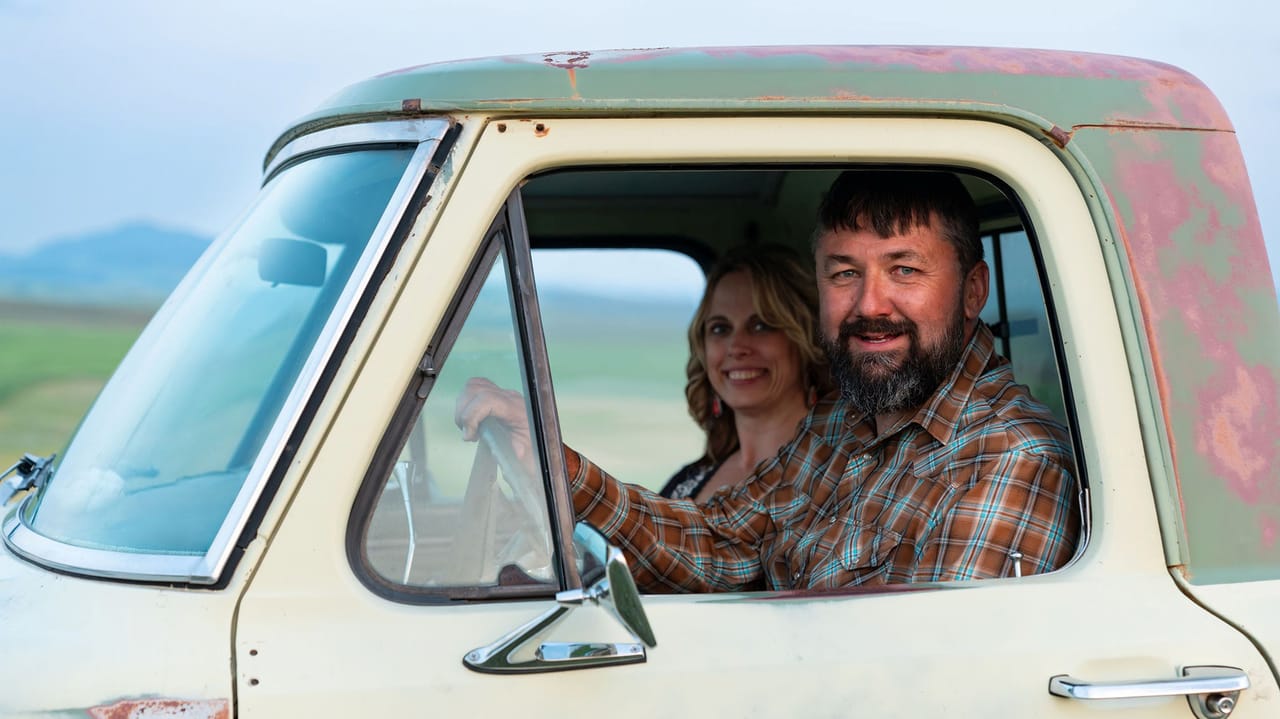
By 2011, their whole operation was fully certified organic. In 2021, they obtained regenerative organic certification.
“It’s been a really exciting journey full of successes and failures, lots of learning curves, and lots of rewards,” Jody said. “The ROC certification, it starts with being certified organic and then adds in just maybe a little more focus on the soil health and your farming practices, not just prohibited substances.”
The Manuels had been looking into perennial crops and found Kernza.
“We first heard about it in 2015, and I vicariously watched the development of it in the state until 2019,” Jody said. “We pulled the trigger and became a licensed grower of Kernza, purchased our first seeds in 2019 and planted it in spring of 2020.”
The couple interseeded the Kernza crop with alfalfa, growing a grass and legume together to reduce tillage.
“We can go seven or more years without any kind of soil disturbance, and that’s one of the biggest challenges with organic agriculture — its reliance on mechanical tillage,” Jody explained. “That’s our way of remedying that. Once it gets established, it’s fantastic for weed control, and it’s absolutely incredible for soil building and increases your water infiltration — all the good things.”
While Kernza is a mainstay on the Manuel farm, they rotate through spring and winter wheat, emmer, spelt, rye, lentils, chickpeas, and alfalfa.
“Now that we have this system with grains and alfalfa in place, we tend to focus more on the grains while we’re in that annual part of the rotation,” Jody explained. “We’re getting plenty of nitrogen fixation from five or six or seven years of alfalfa.”
Through their transition to organic farming, the couple has focused on whole and ancient grains and their associated markets.
“That’s why Kernza has been such a great fit for our farm; it really helps to distinguish our farm in that way,” Jody said. “While some farms are growing conventional corn and maybe having a hard time finding markets, we have the opposite problem. We can’t grow enough, but it takes two to three years to get it established before you even have much to harvest.”
New marketing opportunities
The Manuels have worked with Patagonia Provisions and Deschutes Brewing to build demand for Kernza in their products, and General Mills has started building its procurement of the organic crop.
“There are some beers carried by Whole Foods here in Bozeman. They’re put out by Deschutes Brewing, and they’re a Kernza lager and a Kernza IPA,” Jody said. “That’s where our Kernza has been going the last two or three years, and they use some of our rye.”
These ventures are where their value-added agriculture journey really started. In 2022, the Manuels purchased Cream of the West, Montana’s oldest food company — established in 1914. They also founded Gruff Grains, melding wellness with soil health while educating the public about whole grains and regenerative practices.
Gruff’s ancient grain grits are made from the ancient whole grains farro, spelt and rye.
“Telling families to eat more whole grains is not enough if those grains feel unfamiliar, or if they’re time-consuming or difficult to prepare,” Crystal explained.
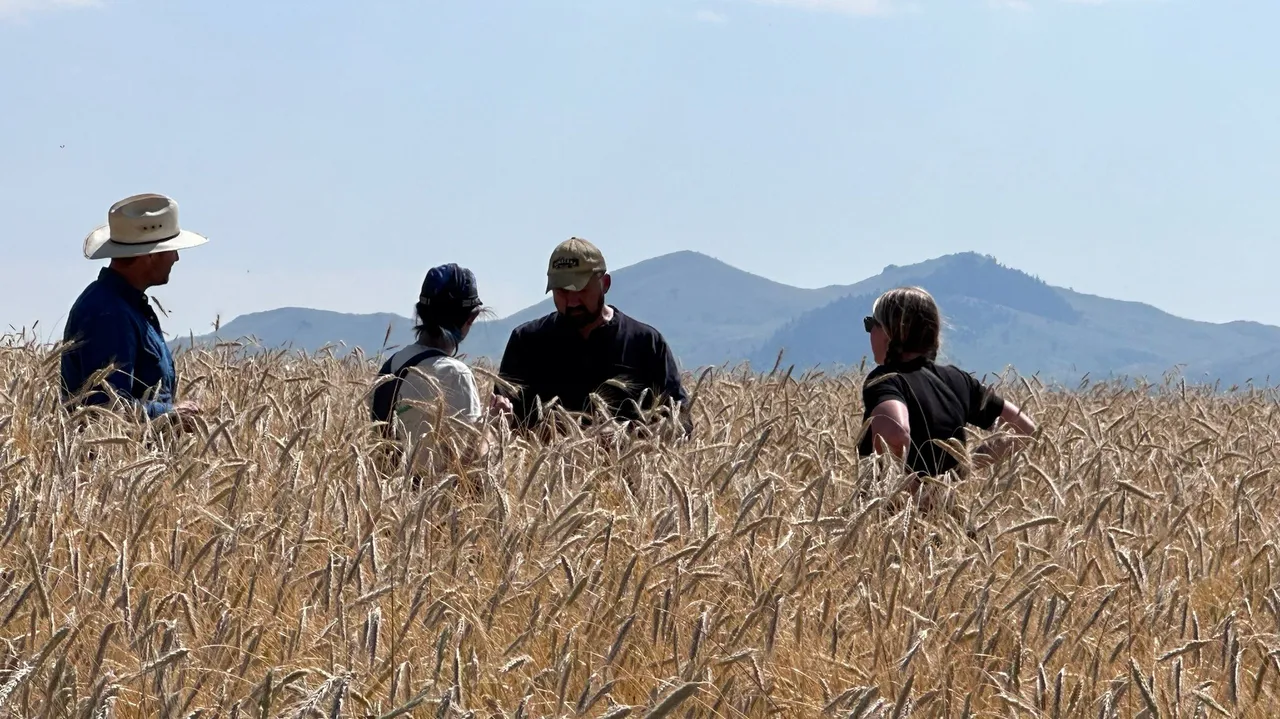
She is the co-founder of Gruff Grains and co-owner of Cream of the West, two Montana-based companies that bring ancient grains to family tables.
“The great grain comeback is not about following another food trend,” Crystal said. “It is about rediscovering grains that have nourished families for generations and making them practical enough to earn a place at today’s table.”
Gruff Grains is where almost all of the Manuels’ grain goes, while grain for Cream of the West is supplied by local Montana farms.
“We kicked around the idea of bringing in our own spring wheat, and I think that’s what we’ll be doing next summer,” Jody said. “There’s just so much potential. If you drive around at harvesttime, there’s usually so much grain that they’re stockpiling it on tarps. That grain is headed out to the coast and around the world, but when you think about the supply side, there is so much room to grow with value-added agriculture.”
The biggest piece of advice the Manuels shared with fellow farmers is to take it slow and just give it a try.
“Become a student of your own soil. See your farm as a living ecosystem, and ask how you can work with it,” Jody said. “Always be willing to question what you’ve been taught, and try new things.”