It's a story that repeats itself over and over again on dairy farms: An older farmer retires, the younger generation doesn't want to farm, and the cows get shipped away.
This was the story of Boggess Dairy six years ago when Luke Boggess' father and uncle retired from the business. The younger Boggess wasn't sure if he wanted to farm. He instead enlisted in the Army and served his country.
But as the old saying goes, "you can take the farmer off the farm, but not the farm out of the farmer." The dairy farm came calling, and two years ago, Boggess came home.
"My parents said they'd support me, but they said I had to get a college degree first,” he said. “So, I went to Virginia Tech, graduated on Dec. 20, and I was hauling cows back into the barn to start milking the very next day. I didn't waste any time.”
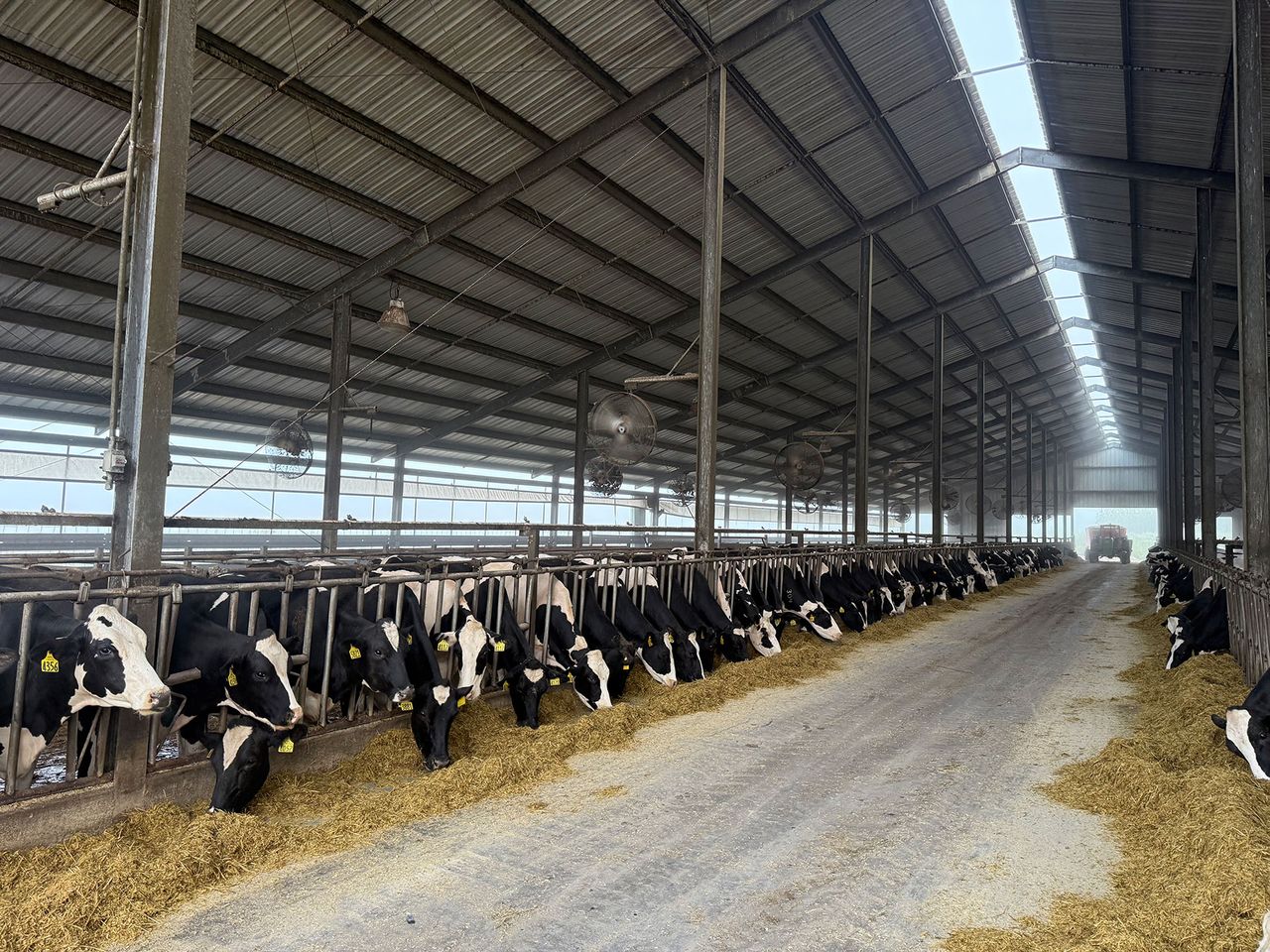
Now, Boggess is milking 200 cows that average 105 pounds per head, putting his farm in the same class as some of the most elite dairy farms in the country.
The farm's transition didn't happen overnight. Boggess' father and uncle custom-raised heifers for five years. He started his own herd through buying a small herd from another farm, and then piecing other animals together from other herds.
Boggess took over dairy facilities that had languished for five years. Still, he was determined to make it work.
One upgrade at a time
Determination alone doesn't fix a facility, though — it takes investment and strategy. One of the first things Boggess did was install an activity monitor system. All the adult cows and breeding-age heifers had CowManager tags placed on them, replacing typical Ovsynch and visual heat detection. Within a year, reproduction rates skyrocketed.
"That's been a game-changer,” he said. “It's changed our reproduction in 13 months more than people thought it would change in five years.”
He installed a crowd gate at the double-9 milking parlor, and a second bulk tank to increase milk storage — enough to accommodate a full semi load of milk at one time and cut down on hauling costs.
"This whole region — honestly the whole nation — is losing dairy farms faster than people can keep track of, so our milk route keeps getting skimpier, and we're all footing more of the bill,” Boggess said. “With the second bulk tank, I don't need a commingled milk route anymore.”
Cow comfort was also a priority. He installed fans in the barn and bought a McLanahan mechanical sand separator to keep the stalls full of fresh sand.
"Anybody who beds with sand will tell you it's a lifelong struggle, but it's worth it," Boggess said.
He also switched to chlorine dioxide predip from hydrogen peroxide and iodine, which he said has cut down significantly on somatic cell count.
With the infrastructure in place, Boggess turned his attention to output, and where his real margins lie. Milk components are important, but so is volume. "I'm in a fluid market. I care about pounds of skim and butter," he said.
His cows average 105 pounds a head and 4.2% butterfat, a number that owes a great deal to what's going into the feed bunk. Grass forages in the total mixed ration have become a big part of his success.
The triticale advantage
His forage of choice? Triticale.
"Some guys swear by rye, some swear by wheat, but triticale really is the best of all those worlds combined, in my opinion," Boggess said.
Triticale is planted right after corn, usually by the end of September or beginning of October. He applies between 7,000 and 8,000 gallons of manure before drilling seeds in. The manure, he said, gives the forage a nice boost before cold weather sets in.
"If you look at all the studies, fall nitrogen, whether it's urea or manure, it's beneficial if you want that top-level protein,” Boggess said. “Then in springtime, first of March to early March, we'll put on a little cocktail, usually urea, AMS and a bit of potash. First half of April is usually our target for chopping.”
Triticale averaged 6 tons an acre last spring. Quality and digestibility are keys, but so is the amount of protein his cows get from the forage.
"If we don't have that, it's really no good to us because we won't be able to include it at the levels we want," Boggess said. "Beyond that, milk per ton and relative forage quality and value are the big-ticket items. But if the other numbers look good, those tend to look good, too."
Once forage is chopped and packed, he does another manure application, a preplant corn fertilizer, burndown, and plants either corn, sorghum-sudangrass or millet.
"We plant corn on some acres, but I like to give the ground a break with sorghum-sudan or millet instead of going corn on corn,” Boggess said. “We've got a little rootworm pressure coming into the area now, which we didn't used to have, so that's a bit of a concern.”
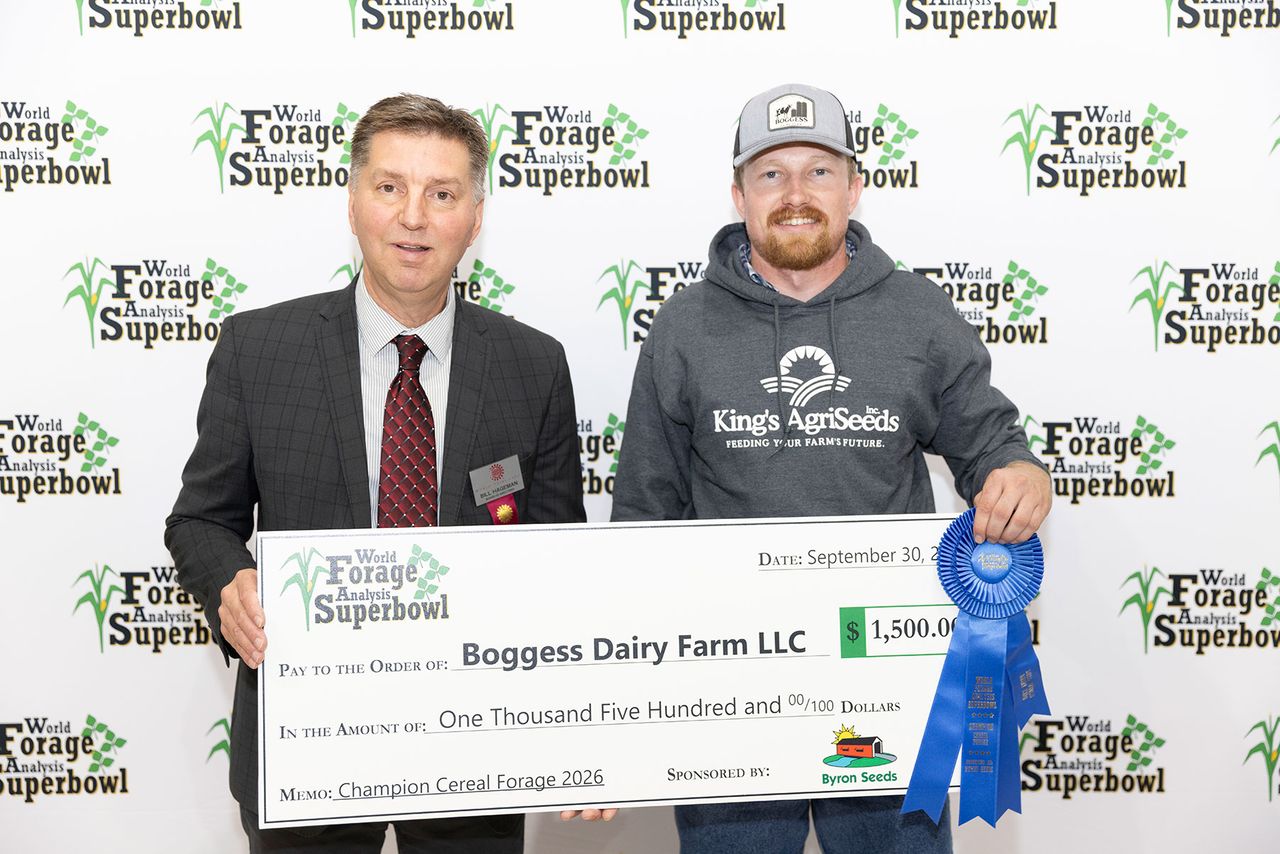
His forage quality has gotten some big recognition. He recently won first place in the grass forage category of this year's World Forage Analysis Superbowl.
Standing alone in beef country
In Boggess’ area of Monroe County, W.Va., dairy farms are few and far between. A friend of his 10 minutes away milks 75 cows. Other than that, there are only four dairies left in his county. Most farmers in the area raise beef cattle instead.
Boggess also dabbles in beef through beef-on-dairy calf breeding, with a set schedule for which first-, second- or third-lactation cows get beef semen. Cows with low genetic merit get bred to beef right away.
He gets about $1,200 a head for his beef-on-dairy calves, down from the peak in summer when they fetched $1,500 to $1,600. Holstein bull calves are fetching $750, down from $1,100 this past summer.
Boggess farms 400 acres, more than enough land for what he needs to feed his cows. And while he's surrounded by beef operations, he doesn't necessarily see that as a bad thing.
"You don't have to fight over land with your dairy farming brethren,” he said. “It's one thing to compete with a beef guy, but it's another to compete with a dairyman.”
Looking back at the two years since he returned home, Boggess doesn't pretend it was easy.
"It took me about a year of working out kinks before things really started clipping along that first year," he said. “You run into every problem imaginable. But now everything is working really well.”