Rachel Sharp never planned to return to her family’s South Carolina farm after law school. But a personal setback brought her home in 2012. That’s when she discovered her father, Don C. Sharp III, was drowning in paperwork while trying to manage both office duties and field operations.
Today, the Sharps are among a growing number of farm families who use artificial intelligence to manage an ever-increasing regulatory burden and operational complexity that threatens to push less tech-savvy farmers out of business.
In this year of squeezed margins, Rachel was quick to note the money they’re saving. “We don’t order extra chemicals anymore,” she said. Then she explained how she uses ChatGPT to calculate her pesticide needs. “We don’t have two pallets worth $20,000 sitting in the shed at the end of the year while we worry that it will go bad if it freezes. We can order just the amount we need because it tells me to the tenth how much I need to order.”
From days to minutes
The transformation extends far beyond chemical ordering. Rachel uses AI to file mandatory water usage reports for South Carolina’s Department of Health and Environmental Control — a project that used to take two to three days to complete.
“I have to report on every well and surface water pool on our farm, and it is mandatory or else you don’t get to pull water for the year,” she said. “You get docked if you’re late. It’s a big deal.”
Her process now involves uploading the blank application and providing the data. She uses ChatGPT to fill in the forms. She, of course, reviews all of the completed reports and noted that the AI tool sometimes places information in wrong spots. “That’s not a big deal,” she said. “I can fix that.”
What’s more important, she said, is the technology gets the numbers right and anticipates needs she hadn’t considered.
For instance, Rachel recalled, it noted a caveat that needed to be explained — and then offered to write the addendum. “I was like: ‘Yes, do that.’ It thinks about things you would have never thought about doing,” she said.
The digital generational divide
Rachel isn’t only concerned about the family farm and Sharp & Sharp Certified Seed. She’s worried about the 75-year-old farmers without tech-savvy family members to help navigate increasingly complex digital requirements.
“I hate seeing those guys who are good and hardworking, honest people get left out because they don’t have a tech-savvy person,” she said. “Some of the best farmers in our county, in our area, they kind of get left behind. And it’s not fair.”
When state regulators introduced that water reporting system a few years ago, Rachel helped farmers her father knew — people she’d never met — simply because they couldn’t navigate the technology.
“Government regulators don’t think things through all the time, and farmers don’t have time to figure this stuff out,” she said.
Sitting beside her, her father noted that he’s one of those people. “This farm wouldn’t be here without her,” he said.
Practical uses for AI
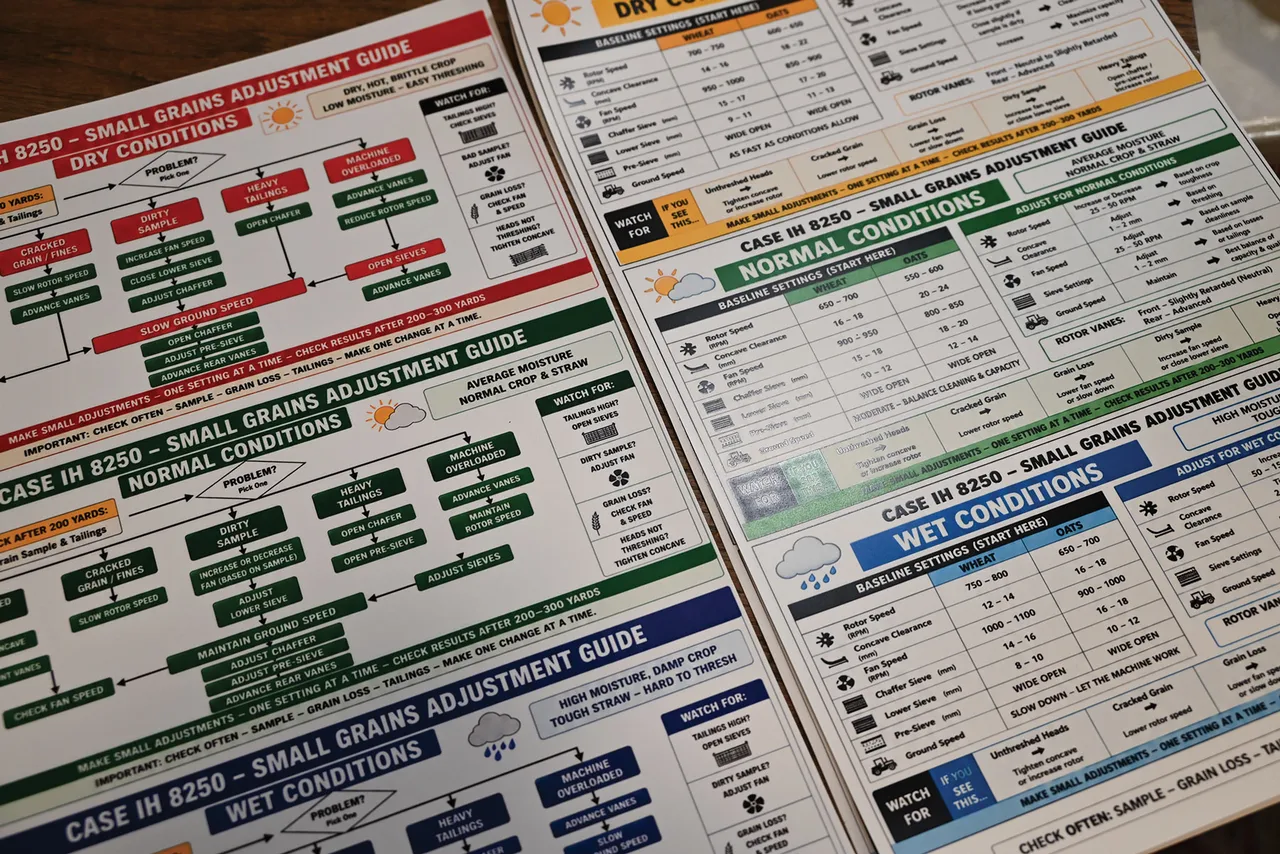
The Sharps use AI for tasks ranging from calculating herbicide control duration to creating maps for contract sprayers and burning permits. Rachel uploads Department of Agriculture requirements and soil analysis from Clemson University, and the system generates required documentation with proper formatting and guaranteed analysis.
“Your brain’s going in 9 million different directions out here,” Rachel said. AI, she said, “is a nice tool. Could we live without it? Yes. But do I want to? Not really.”
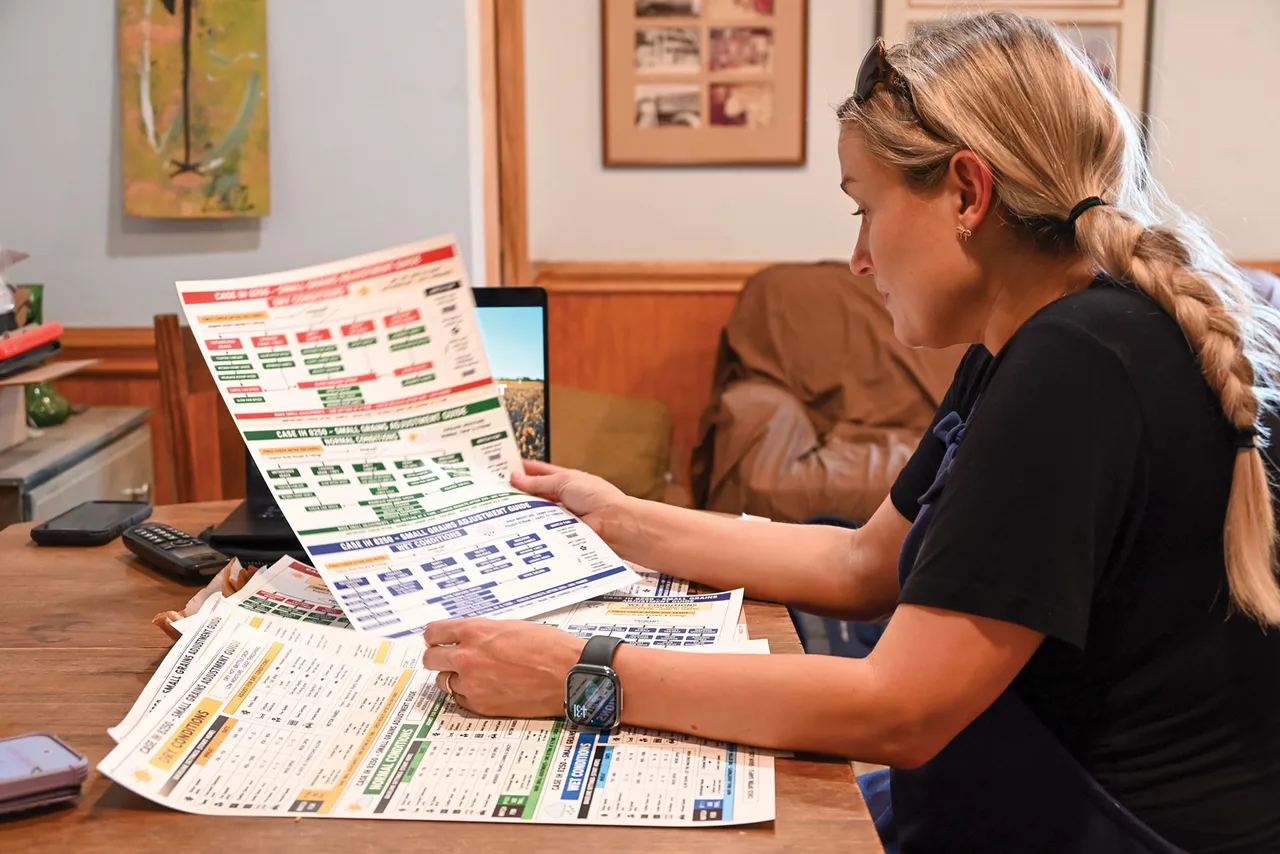
Don, who admitted he mainly uses the technology for simple tasks like looking up phone numbers, is concerned about the danger of such a powerful tool. Yet he also sees potential for more sophisticated applications. He envisions AI-monitored satellites that could alert farmers to equipment problems in real time — like telling a sprayer operator about temperature inversions or warning when the wrong herbicide is loaded for a particular field. He’d really like to see soil sampling capability.
“AI has got to figure out a way to take some of the labor out of farming,” Don said.
Navigating risks and regulations
Both Sharps acknowledge AI’s limitations and dangers. Rachel pointed to the Massachusetts attorney who used AI in court and received incorrect information. She also recalled an experience when she appeared on Oprah Winfrey’s podcast.
The podcast guests were shown a test where AI was given access to 40,000 company emails, including a few notes on plans to shut down the system. As a result, the system identified a planted message about an executive’s affair and generated a blackmail message threatening to expose that executive if they moved forward with those plans.
“That’s thinking,” Rachel said. “How does it know to manipulate? I mean, that’s blackmail. There has to be some rules and regulations out there. If it’s a free-for-all, that’s not good.”
Don worries about autonomous decision-making: “What if AI decides that Iran is a threat to the United States and AI decides to bomb them by themselves?”
Despite these concerns, Rachel believes the technology’s benefits outweigh its risks when properly managed. The key, she emphasized, is understanding that output quality depends on input quality.
“Give it a weird prompt, you’re going to get something really weird,” she warned. “Trash in, trash out. The more data you give it, the better stuff you’re going to get out of it.”
Breaking down barriers
Given the benefits, however, Rachel encourages farmers to try AI. Rather than avoiding the technology entirely, she advised farmers to “start small.”
“I feel like a lot of people just won’t try it, and I tell people all the time, you don’t have to do something real complicated with it. Do something easy and try it out,” she said.
Her vision for AI in agriculture focuses on reducing regulatory burden rather than replacing human judgment. She hopes manufacturing companies and government agencies will synthesize their programs to accommodate AI systems to benefit farmers.
“Why not try to make it easier, work with AI?” she asked. “I think a lot of people are pushing against it, and it’s monetary. There’s a monetary reason behind it.”
For the Sharps, AI is now essential to managing a modern farm operation — not by replacing farming expertise, but by handling the mounting administrative burden that threatens to overwhelm family operations. In an industry where margins are tight and time is precious, that efficiency may determine which farms survive the next generation.
And for Rachel, who is expecting her first child, the time saved on the farm goes back to her family.
“At the end of the day, farmers don’t have to go into the office for two or three hours — or half the night,” she said. “We can go home and be human.”