By Megan Durisin
US President Donald Trump and Chinese counterpart Xi Jinping discussed increasing agricultural trade, and improving oil flows at their summit on Thursday, according to a White House official.
Trump highlighted the need for China to boost purchases of the country’s farm products and curb flows of fentanyl precursors into the US.
The two sides talked about keeping the Strait of Hormuz open to support the energy trade, and Xi made clear China’s opposition to the militarization of the waterway, the official said.
© 2026 Bloomberg L.P.
China renews import permits for U.S. beef plants as Xi, Trump meet
By Hallie Gu and Ilena Peng
China has renewed import licenses for hundreds of US beef plants, reviving trade in the meat as the leaders of the world’s two biggest economies meet in Beijing to stabilize commercial and geopolitical relations.
The permits were renewed on Thursday and are usually valid for five years, according to people with direct knowledge of the matter, who asked not to be named as they’re not authorized to speak to media.
China’s customs office did not immediately respond to a request for comment.
Beijing last year allowed import authorizations for hundreds of US meat plants to lapse after President Donald Trump waged an aggressive tariff war aimed at reordering global trade in America’s favor. That effectively tanked the trade, and US shipments of beef and related products to China dropped about 67% between 2024 and 2025, while total exports last year fell 12%, according to the US Department of Agriculture.
The latest renewals come as Trump meets Chinese leader Xi Jinping in the first visit by a sitting American leader in nearly a decade, and is an early positive signal on what more could come out of the closely-watched summit. The two sides are also expected to agree on reviving trade in other agricultural products, like China’s purchases of American corn and soybeans.
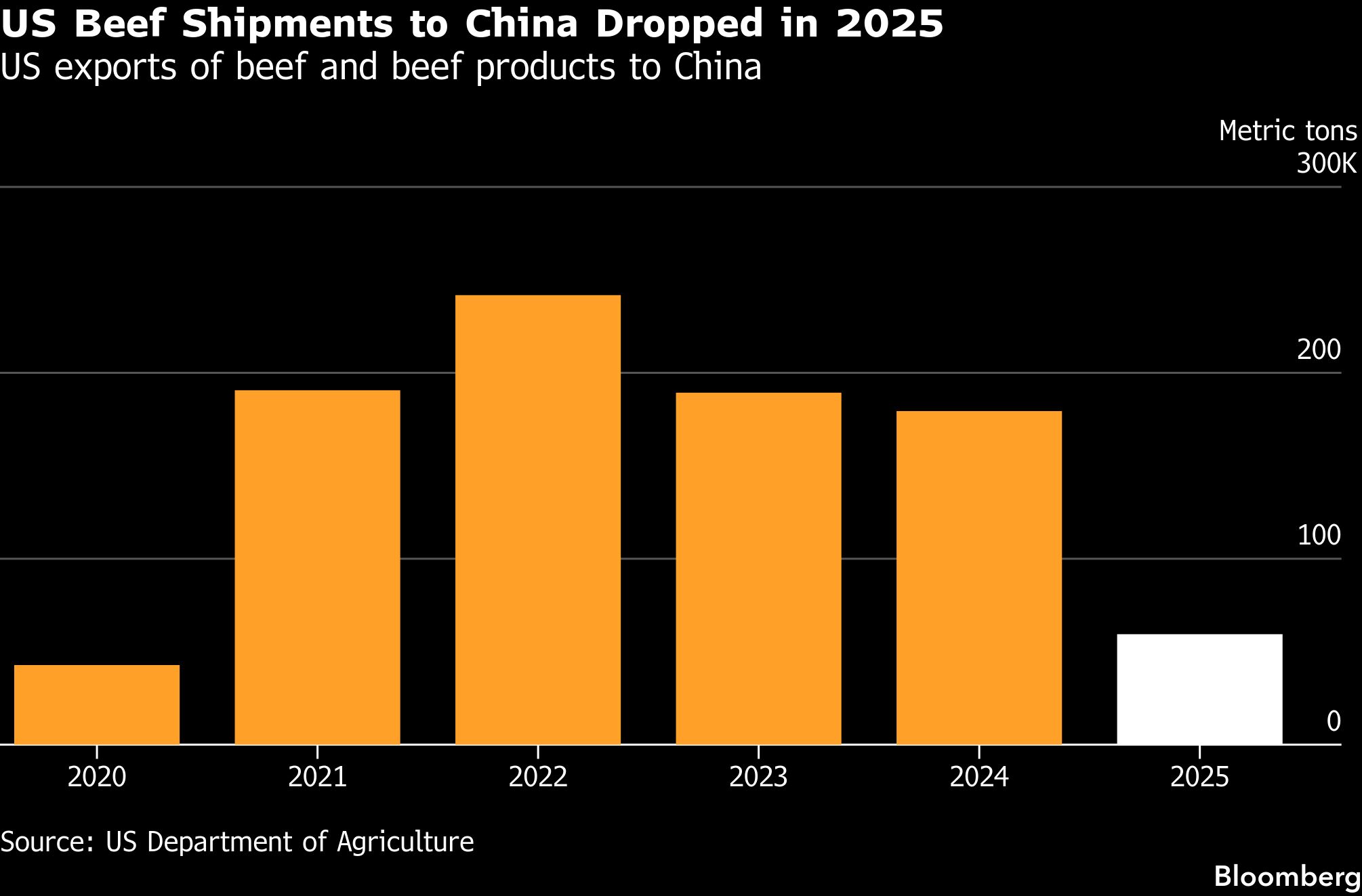
China’s domestic meat producers have been grappling with oversupply and weakening consumption, prompting Beijing to place quotas on beef imports as it seeks to protect the local industry. That’s dealt a blow to Brazil, which is already close to reaching its annual quota, and other major shippers including Australia and Argentina.
The US, in the meantime, hasn’t used much of its allocations in China. The permit renewals for its plants could pave the way for US supplies to take a larger share of the world’s biggest beef market going forward.
China is also a key destination for organ meats for which there’s little demand in the US, and the loss of those buyers has caused average prices for those products to drop nearly 40%, according to the Meat Institute, a Washington-based industry group. That has lowered the value of cattle carcasses for US meatpackers, who are already losing money on each head of cattle they process amid a severe shortage of the animals.
© 2026 Bloomberg L.P.