Soybean futures jumped to two-year highs in mid-May after USDA predicted stronger use and tighter-than-expected supplies in the 2026-27 marketing year, which begins Sept. 1.
The agency’s World Agricultural Supply and Demand Estimates added bullish fuel to a soybean market that started climbing earlier this year behind twin-engine rallies in crude oil and soybean oil. A day after the report’s May 12 release, new-crop November futures reached $12.14 per bushel, up 14% from $10.64 at the end of last year.
To be sure, the key 2026-27 numbers are preliminary and will be revised over the coming year as the growing season unfolds and geopolitics evolve. But for farmers, the May WASDE offers a few takeaways and reasons for both optimism and concern:
Biofuels are blowing up. The bull story in the soy complex is propelled in large part by expectations for a sharp demand acceleration for biofuels in the U.S. and other parts of the world, and the May WASDE did nothing to change that narrative. Domestic processors, already running full bore, are forecast to hike soybean crushing to 2.75 billion bushels, up 4.6% from 2025-26 and a record for the sixth year in a row. Soy oil use for biofuels is seen at 17.8 billion pounds, up 25% and setting a record.
U.S. exports are limping along. Strong crushing demand has helped offset slumping soybean exports, which may improve slightly next year but remain near multiyear lows. USDA pegged 2026-27 soybean exports at 1.63 billion bushels, up 100 million bushels from a 13-year low in 2025-26.
U.S. exports fell sharply after a protracted trade dispute prompted China to stop buying U.S. beans for about six months last year and instead turn to Brazil. While China returned to the U.S. soybean market in late 2025, the hangover from the Trump trade wars lingers.
As supplies get snugger, prices are getting firmer. U.S. soybean stockpiles at the end of 2026-27 came in at an unexpectedly low 310 million bushels, down 30 million bushels from 2025-26. The global balance sheet is also on a tightening track, with ending stocks seen at 124.78 million metric tons (4.58 billion bushels), down 0.3% from 2025-26. Tighter supplies combined with strong demand should support a firmer market. USDA pegged average 2026-27 farm prices at $11.40, up $1 from this year.
Brazil keeps foot on the gas. There appears to be no end in sight to Brazil’s runaway soybean expansion, based on USDA’s numbers. The 2027 harvest for the world’s biggest soybean grower and exporter may reach 186 MMT (6.83 billion bushels), up 3.3% from 2026 and Brazil’s fourth record harvest in the past five years. Argentina may reap 50 MMT, up 4.2%.
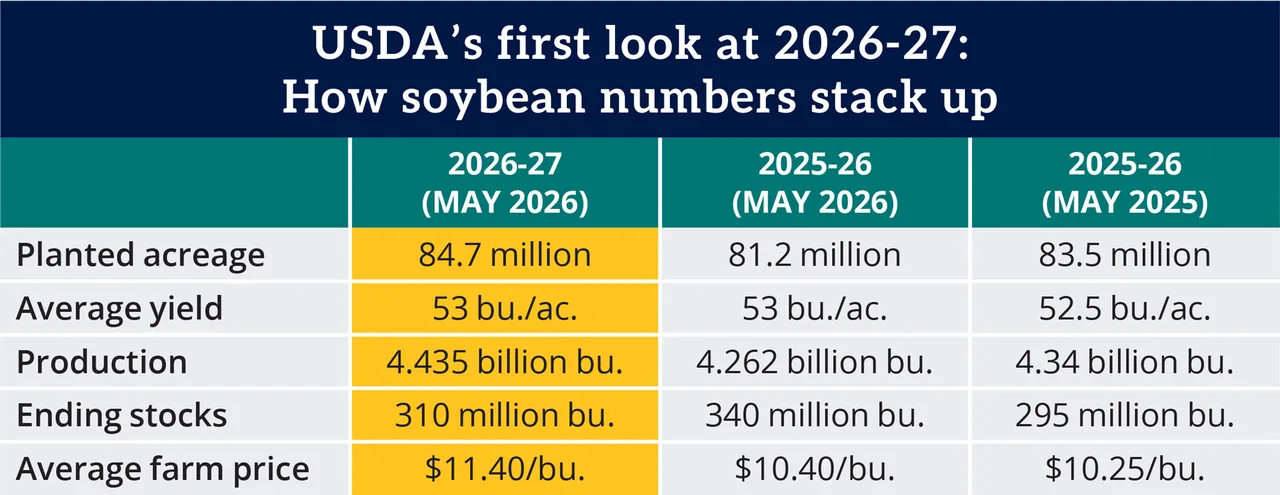
While it’s a good idea to keep an eye on the long view, the here and now matters, too. This spring’s planting season has moved at a brisk pace and soybean acres are expected to jump sharply. Crop-friendly weather could lead to a near-record harvest, based on USDA’s numbers.
On the question of pricing new-crop, there’s nothing wrong with “beans in the teens” aspirations. But it’s also possible a brief grip on the $12 handle will look pretty good in the rearview mirror.