First, they were neighbors who bought and sold from each other. Then they became friends. And at some point, they joined the same peer group. That’s when three Illinois farmers discovered similar challenges — and started talking about a solution.
“We kind of were all asking some of the same questions,” said Aaron Gingerich, Gingerich Farms & Trucking, Lovington.
Gingerich, along with Jeff Brown of Blue Mound and Vince Reincke of Ag Partners LLC in Hillsboro, met three times in 2019 to outline their plan, lay a foundation, and share concerns and goals.
Top goal: Keep it together. They’d seen others fail. To succeed, they discovered, takes a lot of effort.
“A lot of people couldn’t or wouldn’t put the effort in to work together the way it takes us to have to work together to make it work,” Brown said.
All three agreed the management side is intense.
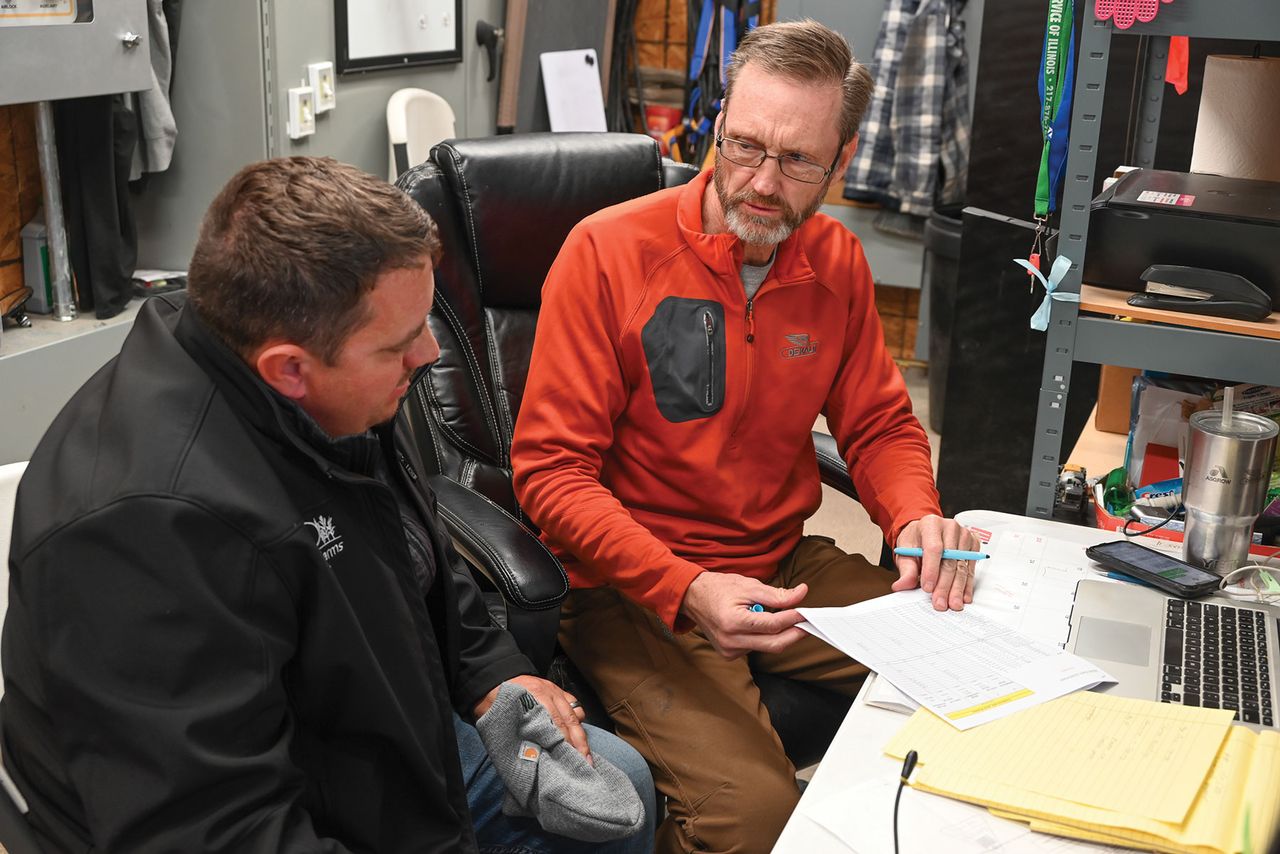
“It does look a little corporate. There would be some families that look at this and go, ‘Oh, that’s way too corporate for a farm.’ Just the way we have to interact with each other is very corporate,” Brown said. “We have to have meetings, and we have to have vendors meetings. We have weekly meetings, monthly meetings, all this stuff.”
Counting on cooperation
Each farmer manages his own ground. They share equipment. They share employees. They buy in bulk. They keep highly detailed records, particularly in regard to the hours machines and people run on which acres. Sometimes one has to write a check to another.
Their partnership is modeled after early cooperatives, which were designed to deliver higher returns to farmers.
“We’re essentially a buying pool,” Gingerich said.
“We get to retain the savings at the field level,” Brown added. “Co-ops lost their focus.”
With three large farms working together, they can more intentionally manage the priority areas of the businesses: agronomics, financials and marketing. Agronomics is Gingerich. Financials is Brown. Marketing is Reincke.
“We go to each other’s strengths,” Reincke said. “I don’t have to be good at everything. I can focus on certain things.”

Now in their sixth season, they say their partnership eliminates redundant expenses and creates efficiencies that none could achieve alone. What began as a practical solution to rising costs evolved into a thriving agricultural alliance. Their success demonstrates that in farming, as in many industries, strength lies in numbers, and cooperation can lead to sustainability and profitability.
Some days, going it alone seems easier. But only briefly, Brown said. “Any-time we think that maybe we can do this on our own,” he said, “it doesn’t take long to figure out that, ‘No, I can’t do this.’”
What they can do, Brown said, is grow. “It takes a lot of work and a lot of structure to create it. But once you create that, then it’s scalable,” he said.
When that happens, it will be a carefully thought-out move, just like when they started. “It’s scalable to some extent, but it just goes a lot better if you have a job for everyone,” Gingerich said. “So, if you had to pick up another person like Jeff or another person like me, what would that look like? Where are they going to fit? Because that might break our model a little bit.”
What won’t break the model is bringing in the next generation, which is already underway. For each partner, the next gen begins as an employee — with a career track to owner. The track plays to that family member’s strengths, which may not be the same as Dad’s.
“They’re each going to have their own thing they’re good at,” Gingerich said. “Instead of teaching them everything, we will focus on their interests, their strengths. It gets us better managers faster.”
But also, slower. Brown, Gingerich and Reincke also have a wide age range.
Brown figures he’ll be the first to step back from leadership. He said he’ll “get out” with confidence that the farm is in good hands with his partners and the next generation.
“I’ve got some really sharp guys who won’t let my kids get stupid,” Brown said, “I win. The family wins. Our legacy wins.”
5 tips to form successful partnerships
Farmers who consider joining forces to enhance their input-buying power, improve management efficiency and strengthen their leadership team need to evaluate these five areas, according to Brown, Gingerich and Reincke:
1. Complementary skills. Look for partners who excel in different operational areas.
2. Shared values. Align on basic strategies and ethics.
3. Long-term relationships. Trust and respect are essential.
4. Age diversity. The age spread among partners provides different perspectives and supports succession planning, aiding continuity and pacing the leadership transition.
5. Speaking truth. Be up front in discussions and keep detailed records.