How tight is tight in the grain markets? The stocks-to-use ratio helps answer that question.
In corn, the equation quickly swung toward the tighter side over the summer as either extreme heat or excessive rainfall in different parts of the Midwest slashed yield potential while demand remained robust. The result has been a sharp and welcome reversal of fortune for farmers.
In its Sept. 11 Supply and Demand report, USDA cut its forecast for U.S. corn supplies at the end of the 2026-27 marketing year to 1.57 billion bushels, down 18% from 2025-26. That knocked the stocks-to-use ratio below 10% for the first time in four years. At 9.68%, it’s now the lowest since 2021-22.
The widely followed stocks-to-use ratio measures expected ending stocks as a percentage of total annual consumption, with a declining ratio signaling a shrinking buffer and increasing vulnerability to supply shocks. It’s also strongly correlated with price volatility as markets become increasingly sensitive to weather, production forecasts and shifts in demand. A ratio below 10% is historically associated with steep futures rallies.
Looking at it another way, the U.S. will have about 35 days of corn stocks at the end of 2026-27 next summer, down from 44 days at the end of 2025-26, based on USDA’s projections.
Remember $8 corn?
In 2021-22, when the ratio dropped to 9.24%, corn futures hit a 10-year high above $8.24 per bushel. (Russia’s February 2022 invasion of Ukraine was also a factor.)
Could corn prices be destined for a rare trip above $8, or at least $6? Some advisers say the latter is possible. But as the fall harvest accelerates, you probably don’t want to wait around too long before making sales.
December corn futures have retreated from a three-year high at just under $5.50 in early September. That could turn out to be a near-term peak, said adviser Jon Scheve, owner of Scheve Grain, citing corn yields that may turn out better than expected.
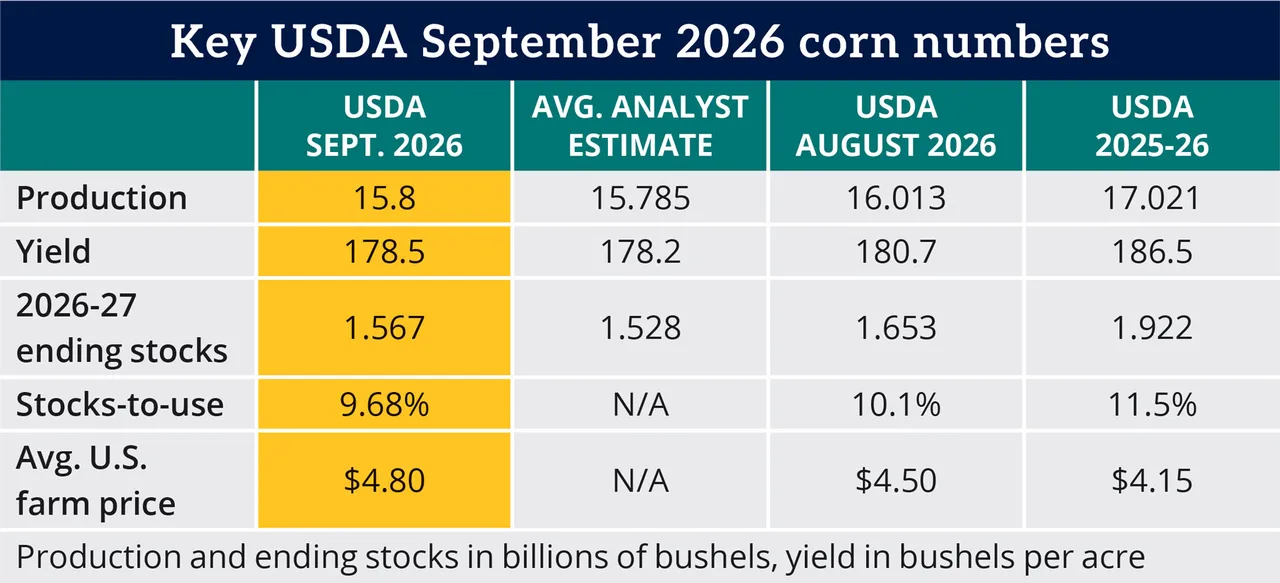
Additionally, while the corn crop may be smaller this year, that doesn’t mean it’s small. In a separate report Sept. 11, USDA dropped its production estimate 213 million bushels to 15.8 billion bushels. That’s down 7.2% from 2025 but still the second-biggest harvest on record (see table for more USDA figures).
Longer-term prices, such as March 2027 futures, still hold potential for further upside, Scheve said. (March futures reached $5.64 Sept. 2) But over the near term, the market could be vulnerable to a corrective setback if speculators pare back a record level of bullish bets.
For now, current corn prices should offer many farmers opportunities to turn a profit. Scheve suggested farmers take advantage as they move into harvest.
“I would sell any corn coming off the combine that you can’t fit in the bin,” Scheve said. “You can sell it now for at or slightly above breakeven. There is no reason not to make sure that the grain you’re not going to store at home isn’t already sold and then leave whatever else you have as an opportunity to see what the market brings down the road.”