Anyone looking for signs that ramped-up Russia-Ukraine hostilities over the summer would prompt global wheat buyers to increasingly seek out U.S. supplies did not find satisfaction in USDA’s latest batch of data.
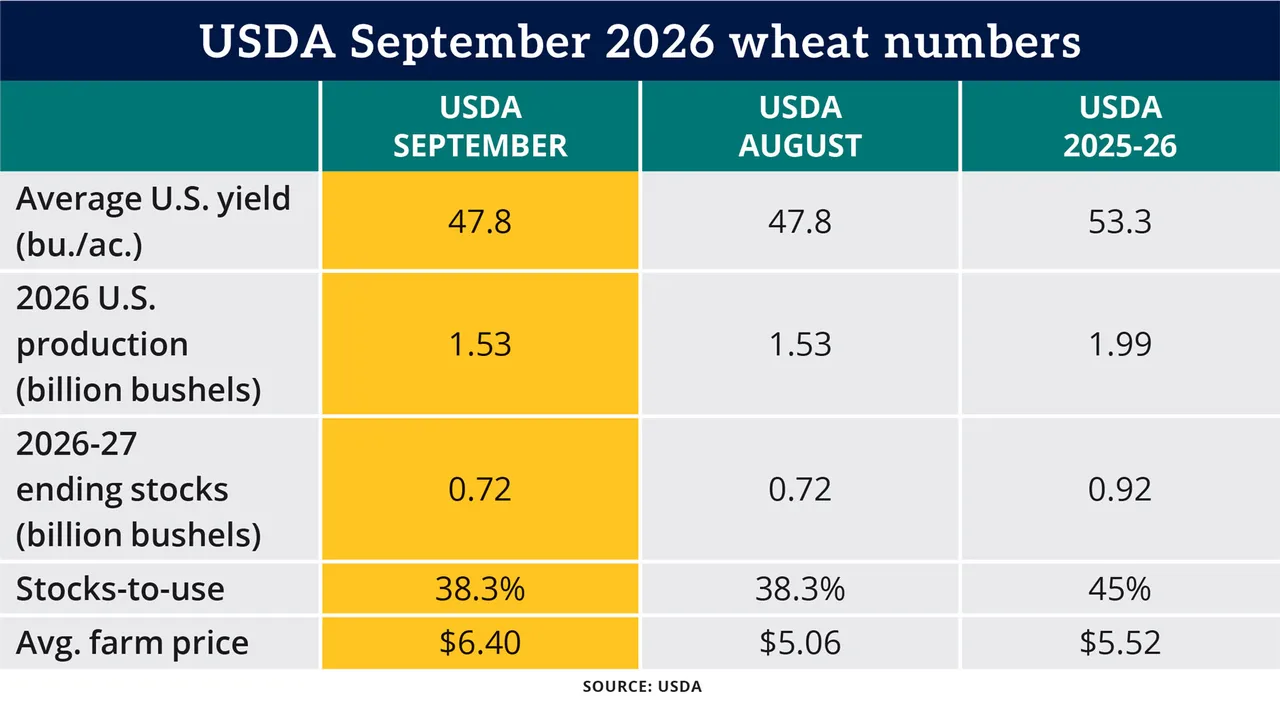
In the September Supply and Demand report, USDA kept its estimate for U.S. wheat exports in the 2026-27 marketing year at 717 million bushels, a three-year low. Aside from cuts to Russian and Ukrainian exports, changes to the global balance sheet were relatively modest, even as the war continued to disrupt shipments out of the Black Sea, a key grain export hub.
USDA did lower the two countries’ exports by a combined 4 million metric tons, or almost 7%, from previous forecasts. Russia is the world’s No. 1 wheat exporter and Ukraine is also a top supplier. Together, the two countries accounted for over one-quarter of global wheat exports in 2025-26.
Russia and Ukraine continued to exchange attacks on each other’s energy and port infrastructure through mid-September, and there appeared to be little movement toward peace. The longer the war drags and Black Sea shipments remain constricted, the more likely it is that buyers will eventually turn to other suppliers like the U.S.
Or at least that’s the theory. For 2026-27 through mid-September, U.S. wheat shipments totaled just 208.5 million bushels, down 28% from the same period a year earlier, based on USDA export inspections.
Meantime, a war-driven rally that sent U.S. wheat futures to three-year highs at the beginning of September has lost some steam. Futures based on hard red winter wheat topped $8.58 per bushel Sept. 2 but then dropped under $8.
“Despite the sharp downturn in both Ukrainian and Russian grain exports the past six weeks, the world doesn’t appear overly concerned with that situation,” said John Zanker, senior analyst at Farmer’s Keeper. “That will likely change in the coming weeks and months, but for now, the bulls are growing impatient.”
The market’s pullback in part reflects beliefs that wheat supplies globally will remain ample. In the September reports, USDA raised estimated global ending stocks 1.1% to 276.3 million metric tons (10.2 billion bushels), reflecting stronger harvests in Argentina, Australia and Canada. Additionally, the grain backed up in Russia and Ukraine is still there, and at some point, it’s going to find its way out.
For U.S. growers, it’s a case of hurry-up-and-wait to see when, or if, exports gain a war-related boost. Some consolation may be found in signs that prices appear to have bottomed out from multi-year lows in 2025, with HRW futures up over 50% compared to year-ago levels. If futures are any indication, farmers should be able to sell their 2027 crop at much stronger prices — or at least better than they received in 2026.