September was a rough month for U.S. wheat markets.
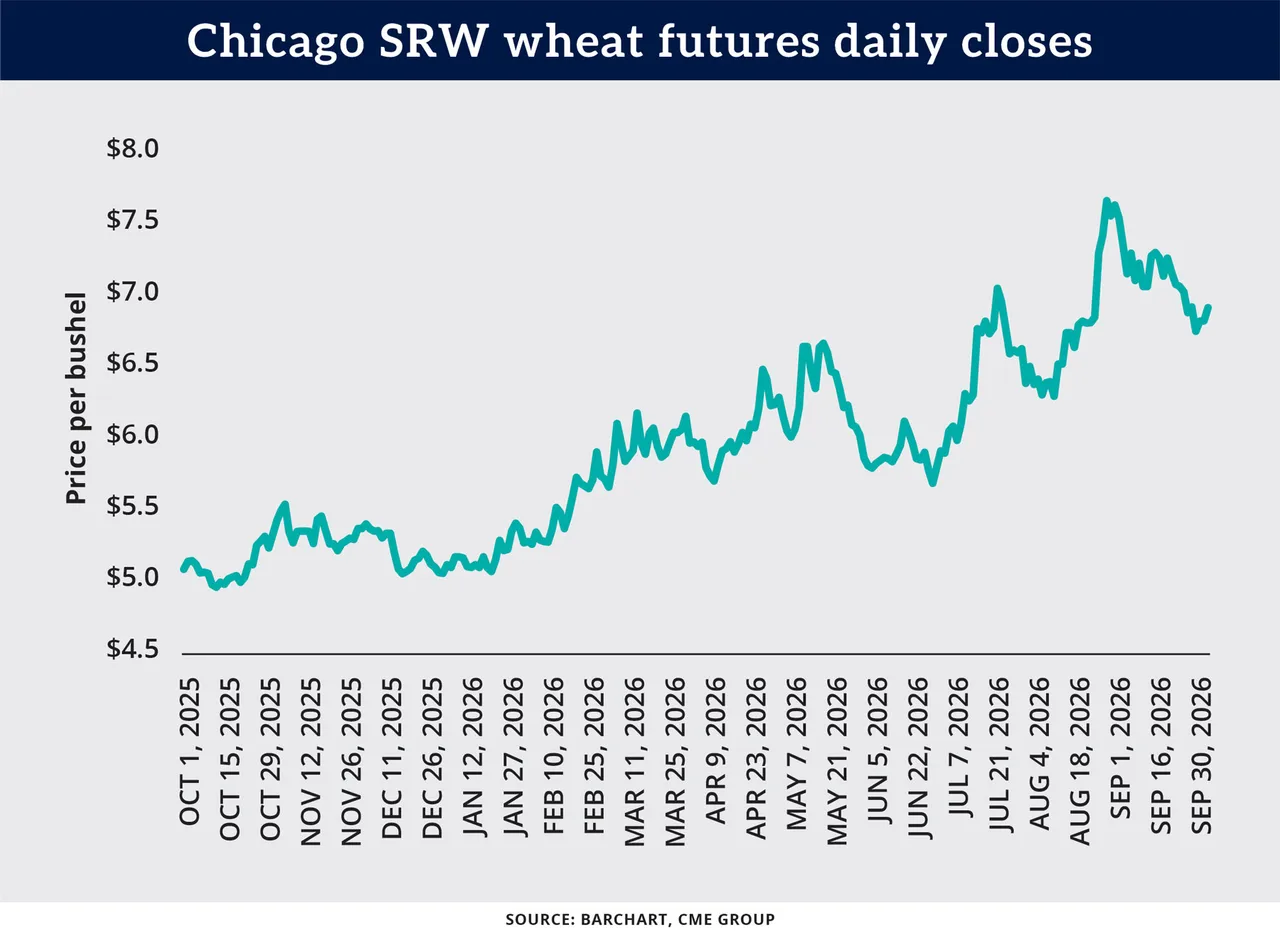
Futures based on soft red winter wheat, one of the U.S benchmarks, tumbled almost 13% in September, the market’s worst one-month performance since June 2024. Hard red winter futures sank roughly the same percentage. This after both markets started September with a bang by notching three-year highs ($7.95 in SRW futures, $8.58 in HRW).
So it goes in U.S. wheat, which remains bedeviled by a familiar combination of volatile geopolitics, weather extremes, stiff global competition and dismal export demand.
The market showed signs of stabilizing in early October, and wheat prices are still up over 30% from year-ago levels. With domestic supplies down sharply in the wake of last year’s drought-ravaged crop, the wheat market still has a decent chance of sustaining an elevated price environment in 2027. But producers need to keep a close eye on these key dynamics:
Winter wheat planting and crop establishment. Seeding the 2027 winter wheat crop was off to its slowest start on record amid a combination of excess rains in the eastern Midwest and persistent drought in the Southern Plains. Heavy rains also delayed corn and soybean harvest in some areas where winter wheat is often double-cropped. Fortunately for some Plains growers, September did bring some rain relief for parched soils. USDA’s emergence progress readings and weekly condition ratings will offer clues as to whether the crop can rebound from last year’s disaster.
Black Sea export disruptions. Russia-Ukraine hostilities that escalated over the summer dragged into fall, and few signs indicate the two sides are anywhere close to a ceasefire. Concern over Black Sea disruptions helped fuel the market summer rally, but wheat charts indicate the bullish impact has faded, partly because U.S. wheat exports are seeing little apparent benefit. Nonetheless, both the Russia-Ukraine and the Middle East wars remain highly volatile and should be monitored closely.
USDA reports, including Winter Wheat Seedings. USDA’s monthly Supply and Demand reports in October, November and beyond are worth watching, due not only to potential revisions to Russian and Ukraine exports, but also to production figures for top Southern Hemisphere growers like Argentina and Australia. (In September, USDA cut combined Russian and Ukrainian wheat exports by almost 7% from a prior forecast.) In January, USDA releases its annual Winter Wheat and Canola Seedings report.
Any signs of a recovery in U.S. exports. With domestic supplies tight, U.S. wheat prices hold a significant premium on the global market, and HRW wheat is not priced competitively compared to other top exporters like Russia. Competition remains fierce, even with global stockpiles expected to contract in 2027 and Europe’s wheat crop withered by drought. Another problem for the U.S. is reduced demand from price-sensitive importers, including Indonesia and Nigeria.
Market-watchers still hold out hope for an eventual rebound in wheat exports, but it’s shaping up to be a long wait. In the first month of the 2026-27 marketing year, U.S. wheat shipments totaled 245.1 million bushels, down 35% from the same period a year earlier.
“U.S. wheat exports remain off to their slowest start in three years on both cumulative export inspections and sales, dampening prospects for 2026-27,” said StoneX analyst Mike Castle in early October. “But the big question remains if [or] when we see additional export demand shifted to the U.S., as supply from the Black Sea remains disrupted and Canadian spring wheat quality risks deterioration.”