Political consultant James Carville in 1992 famously said: “It’s the economy, stupid.”
When folks in agriculture look at crop-based biofuels, they might say: “It’s the demand,” and leave off the last bit.
In a world where U.S. ag demand is subject to geopolitical whims and wars, where extreme weather can whipsaw yield worldwide, particularly with this winter’s expected Super El Niño, and where production costs challenge margins even under the most promising grain prices, the most desirable prospect is any that provides consistent demand. And it’s all the better when it’s local.
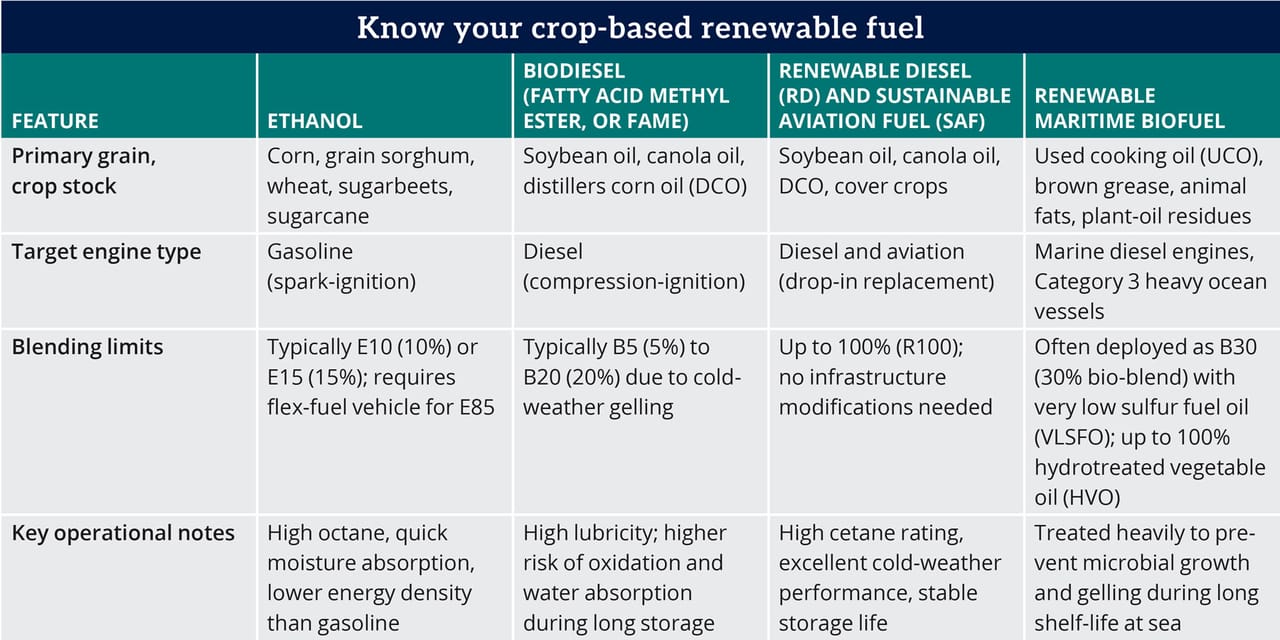
What’s helping meet that demand? Crop-based renewable fuels, including ethanol, biodiesel, renewable diesel, sustainable aviation fuel and marine biofuels. Despite policy uncertainty, their impact on grain prices and rural economies is significant.
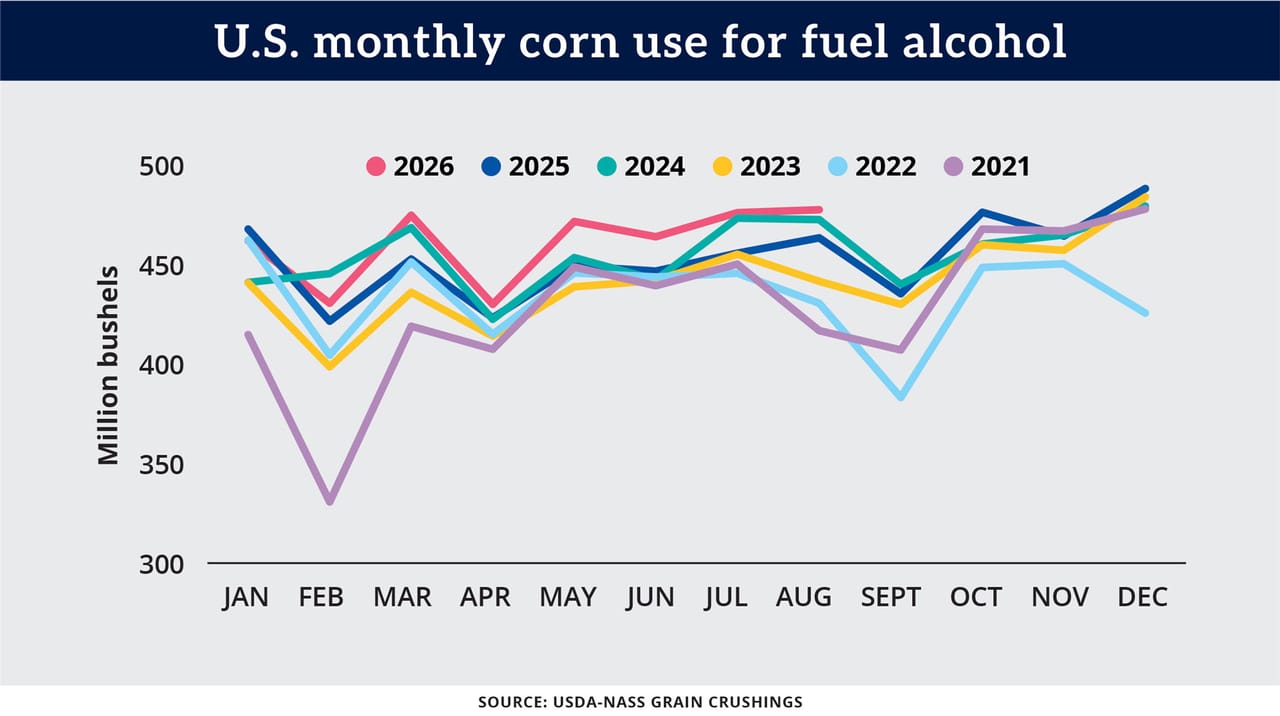
Ruben Richardson, who farms in Yuma, Colo., invested in Colorado Agri Products about 20 years ago — first with an ethanol plant in Sterling and then a plant in his backyard — literally. You can see it from his grain bins.
Though the investment and process were daunting given the risks involved, Richardson said he was all in on bringing an ethanol plant to Yuma. He simply acted on the community’s strong need.
“Yuma County was a corn-positive area, meaning there was more corn going out of this county than coming in,” he said, noting around 23 million bushels of corn is grown within 80 miles of the plant each year. “So, we pushed to make this happen here, and we’re counting our blessings now.”
Those blessings, of course, include the financial opportunity brought by local demand. With drought in their corner of the country this year, farmers in northeast Colorado who have corn to sell saw a 65-plus basis over the summer and 45-plus for new corn. “That’s huge for us,” he said.
Richardson and others who raise cattle in the area have an advantage in the ready supply of wet distillers grain, a coproduct of ethanol production.
Though gasoline consumption is expected to decrease in the U.S., which would decrease demand for ethanol, the global market can provide a home for domestically produced ethanol, CoBank’s Jacqui Fatka said. Maritime fuels could add 4 billion to 5 billion gallons of new demand, or 1.5 million bushels of corn. Meanwhile, higher biofuel targets in other countries could increase ethanol use by 70% by 2030, and by 30% this year alone.
“The U.S. is well positioned to take advantage of those immediate increases in biofuel targets,” Fatka said, speaking at the 2026 Women in Agribusiness Summit in New Orleans.
Local demand drives farm profit
Crop-based biofuels are expanding local demand nationwide. Despite federal policy uncertainty, growing domestic markets, especially for soy oil-based biodiesel and renewable diesel, continue to benefit rural communities.
“It’s an exciting time in the soy crush world,” said Devin Mogler, head of the National Oilseed Processors Association. “It feels a lot like the ethanol industry two decades ago with the rapid expansion. …We’ve had NOPA members invest over $6 billion to expand capacity by over 25%. And a lot of that crush is happening because of biofuels policy.”
More plants create more local markets. And as Farm Futures’ Best Places to Farm analysis found, based on the last ag census, local demand drives financial performance.
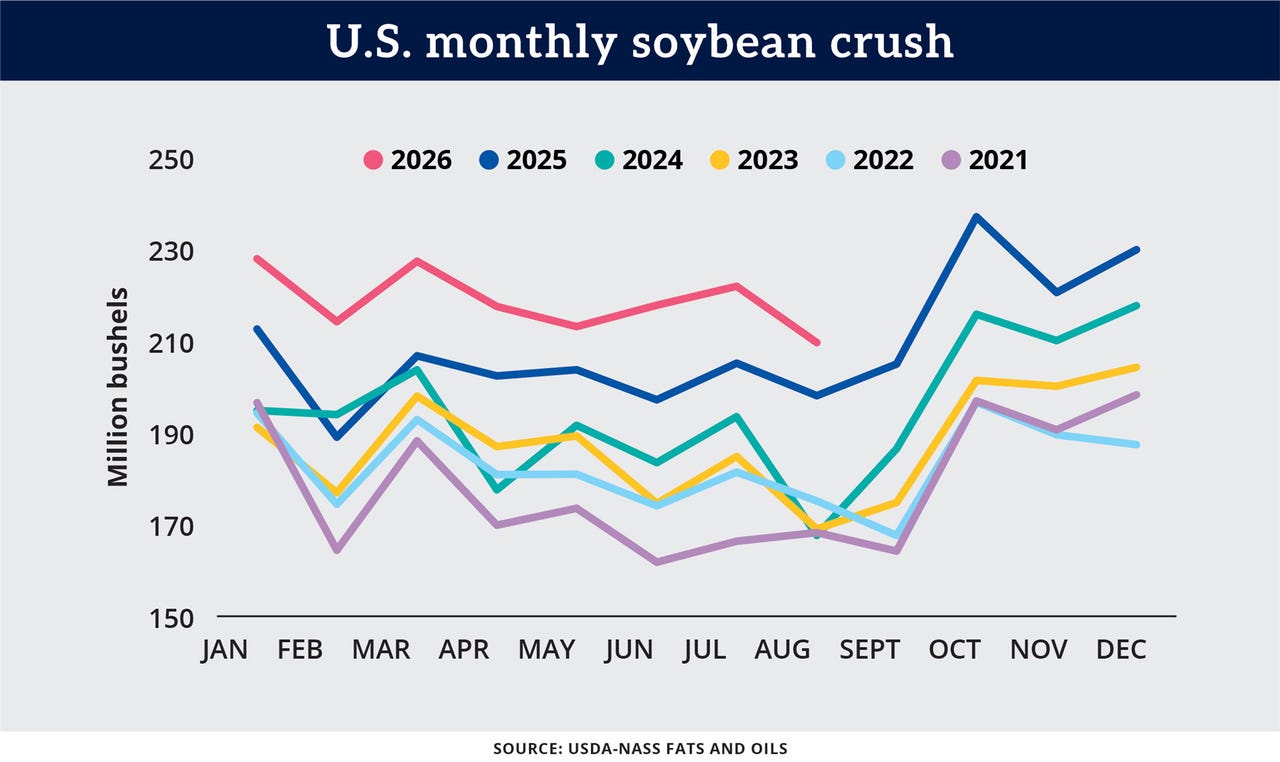
New high-capacity processing plants include Platinum Crush in Alta, Iowa; Norfolk Crush in Norfolk, Neb; and North Dakota Soybean Processors in Casselton. CHS Inc. also announced a new plant in Evansville, Wis. That plant, capable of processing 80 million bushels of soybeans yearly, is expected to be on line in 2028.
That expansion improves opportunities across the ag spectrum. “Soybean is 80% protein and 20% oil,” Mogler said. “Historically, we crushed for the meal. Now we’re crushing increasingly for the oil. When we’re crushing for more oil for all the biofuel and food demand, you’re creating a whole lot of soymeal, and that’s great for our domestic livestock farmers, particularly if you’re feeding broilers or swine or dairy or egg layers.”
Much of that meal and oil goes toward exports, where the U.S. has seen record demand this year. Traders and market analysts often tout this as vital support for better-than-expected soybean prices.
The underlying good news is that processing expansion started in 2021 and is continuing, said Bree Baatz, Terrain grain and oilseed analyst.
“What is good about domestic processing is you are getting consistent, year-round demand for those bushels of beans, less extreme variability from the price side, and favorable basis,” Baatz said. “Not only do we have an export market for the meal, which is more of the quality we want it to be, but also that domestic soybean oil is going into vital fuel production.
“So, we’re essentially controlling our own destiny … and it’s going to be a better long-term strategy for agriculture, for U.S. soy producers.”
That’s the economic news U.S. farmers need. It really is about demand.